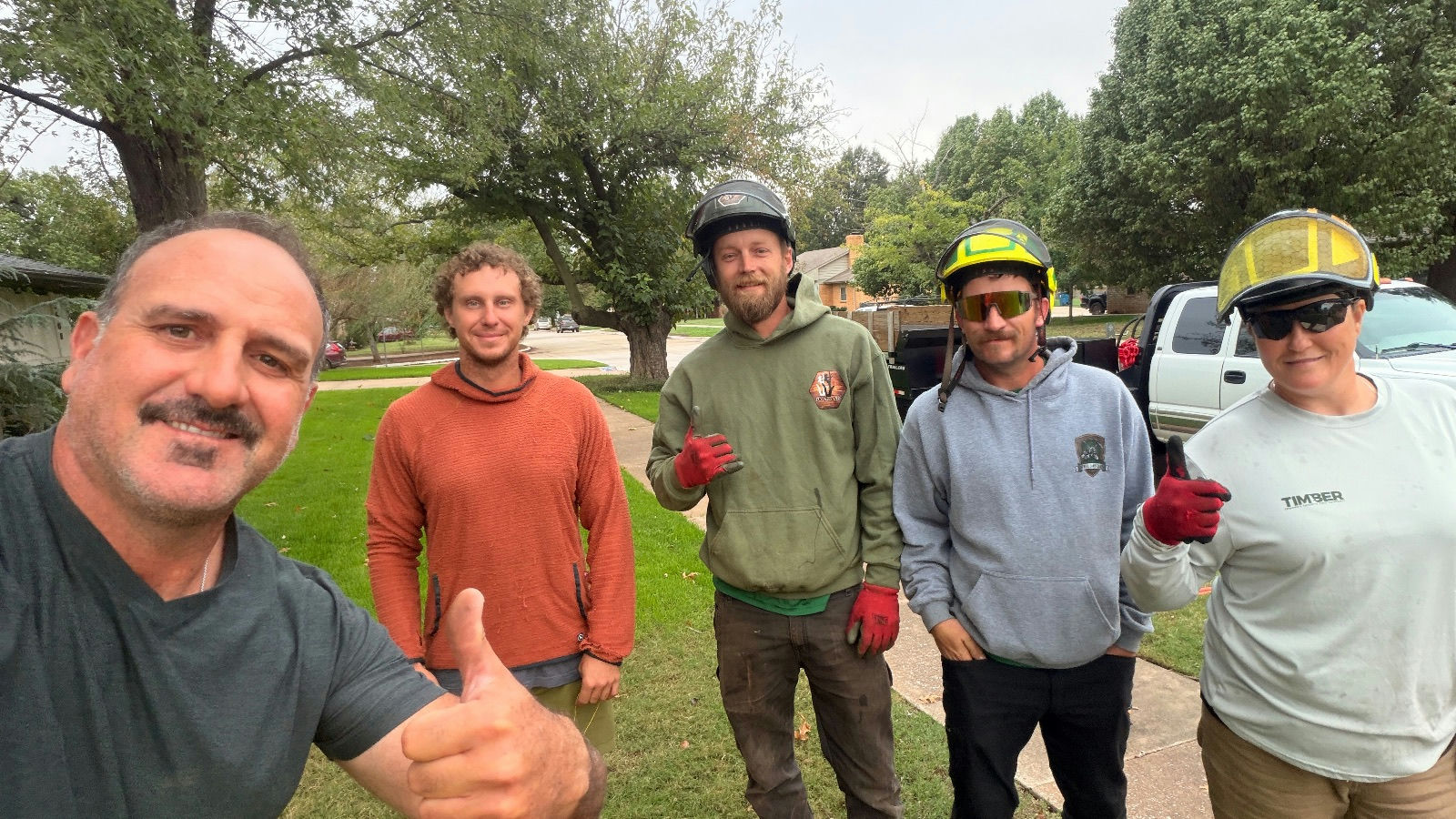
 Back to Featured Projects
We originally arrived at this property near Oklahoma Christian University in Edmond to handle a standard canopy trim. Once our climber got up into the crown, we uncovered severe internal trunk rot spreading down through the core. Because the massive red oak sat directly between two homes and a privacy fence, taking it down became the only safe call.
WHAT STARTED AS A ROUTINE PRUNING JOB
The homeowners called us out to prune back the canopy on a mature red oak shading their backyard near Oklahoma Christian University. On the ground, the tree still showed green foliage, and it looked like a classic pruning project to clear deadwood and balance out the branches over the roof.
Once our climber tied in and got high into the crotch structure, the situation changed. Wood that should have been dense and sound gave way under light inspection. We found extensive fungal decay and hollow chambers running straight down through the center of the main trunk. What looked like a healthy canopy from the curb was actually perched on compromised structural timber.
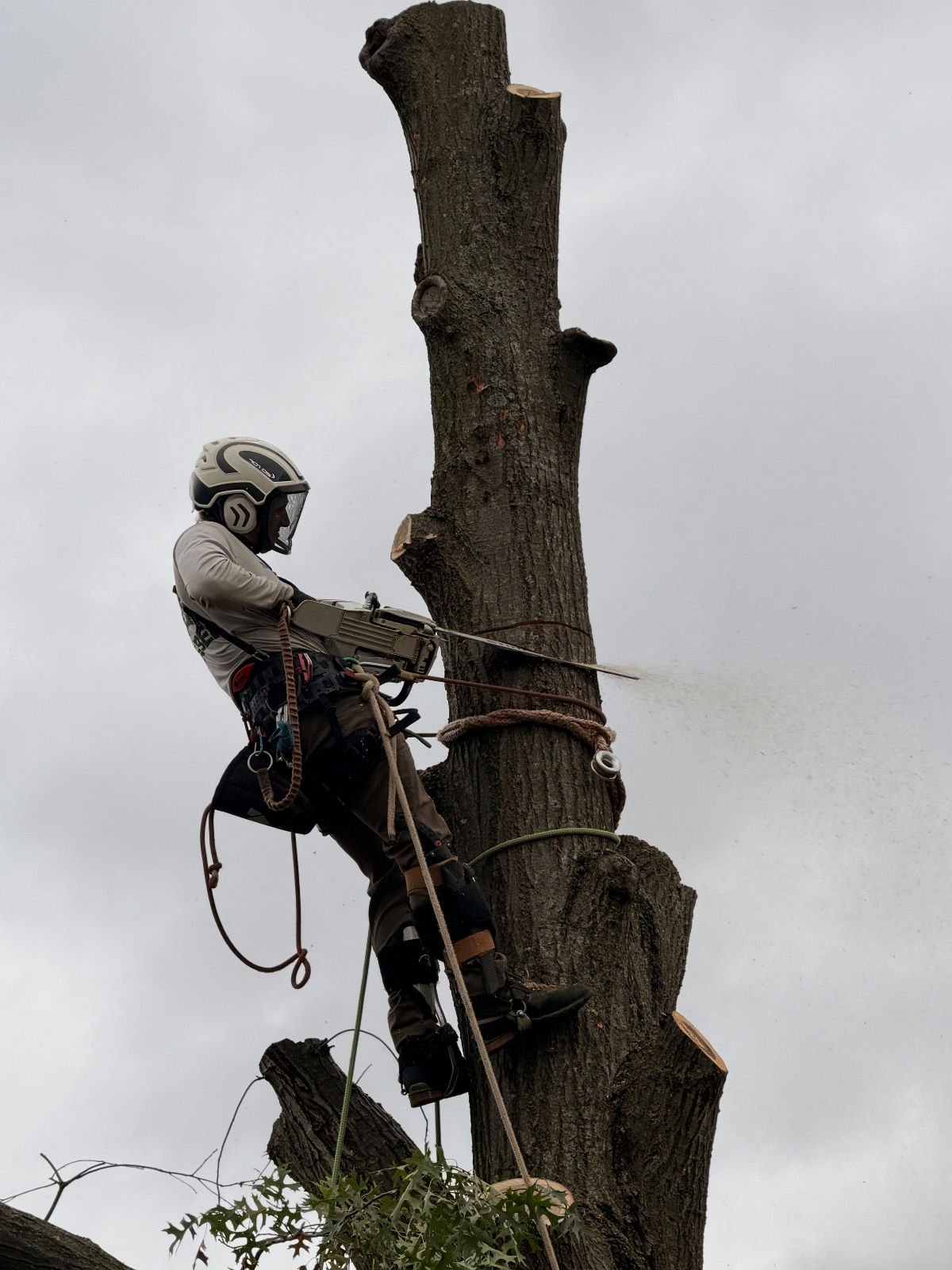
THE HIDDEN DANGER OF INTERNAL ROT
Red oaks are tough, heavy hardwoods, but when rot takes hold in the heartwood, the tree loses its tensile strength without giving obvious visual cues to someone standing on the lawn. Green leaves can keep growing from the thin outer sapwood layer even while the interior column has turned to mulch.
With Oklahoma spring storm fronts bringing 60-mile-per-hour gusts and heavy ice loads in the winter, a hollow red oak of this mass becomes an unpredictable hazard. It sat directly in the strike zone of the homeowner’s roof, the neighbor’s property, and the wooden perimeter fence. We walked the homeowners through the cross-section of what we found, and together we agreed the tree could not safely remain.
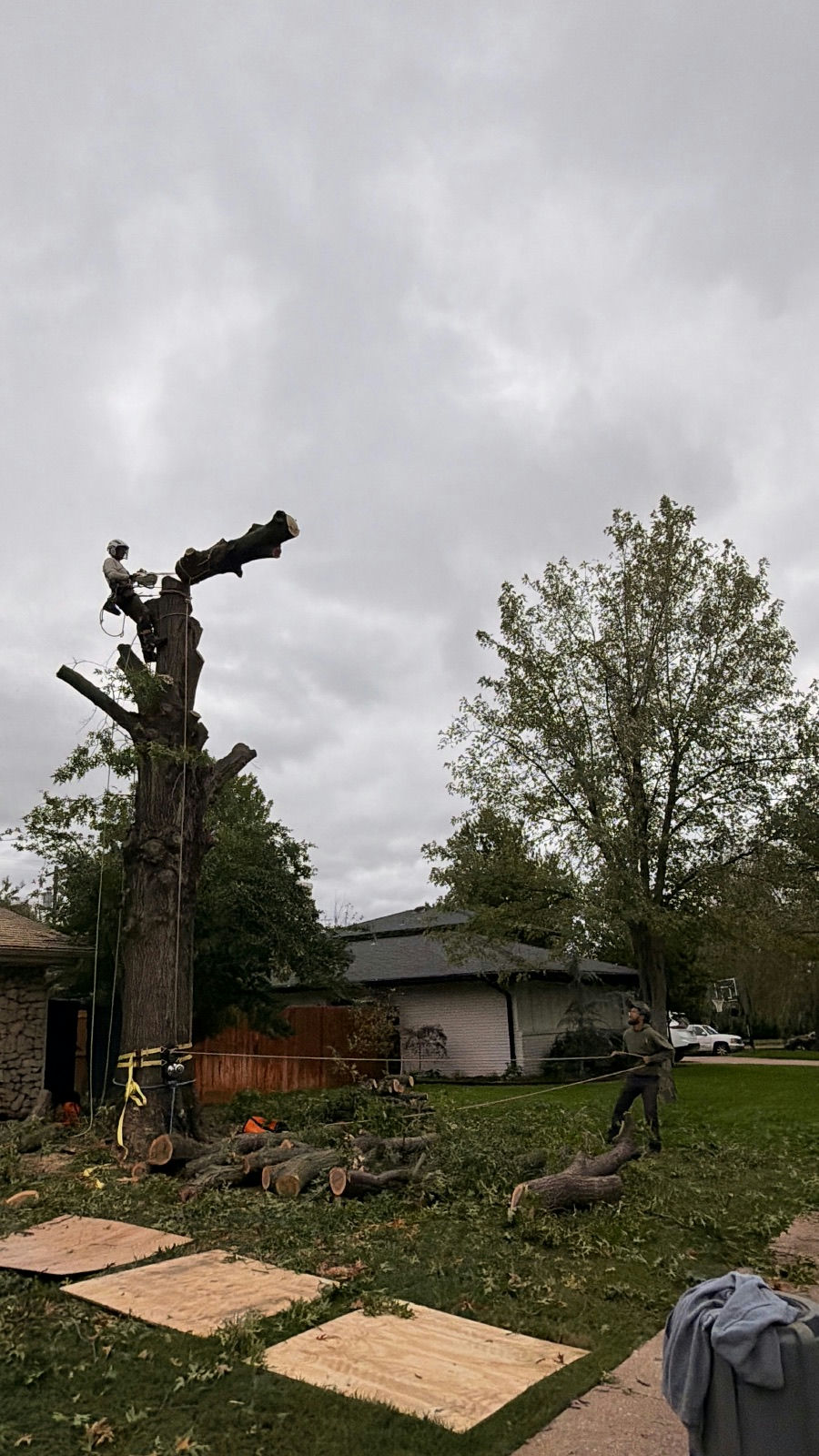
HOW WE RIGGED IT DOWN PIECE BY PIECE
Felling this tree in one cut was out of the question. With zero drop zone and structures on multiple sides, every piece had to be dismantled from the top down. Our climber set high friction points and pieced out the canopy branches first, dropping them onto protective plywood ground mats to save the turf from gouges.
For the main spar, we switched to heavy negative blocking. The climber made precision undercut notches on the upright trunk, while the ground crew ran taglines and friction hitches around the base. Each several-hundred-pound trunk section was eased to the turf under total tension, well away from the fence and the stone house wall.
Once the heavy upright trunk was down to a manageable stump height, our ground team bucked the logs into firewood lengths and loaded the debris onto the trailers.
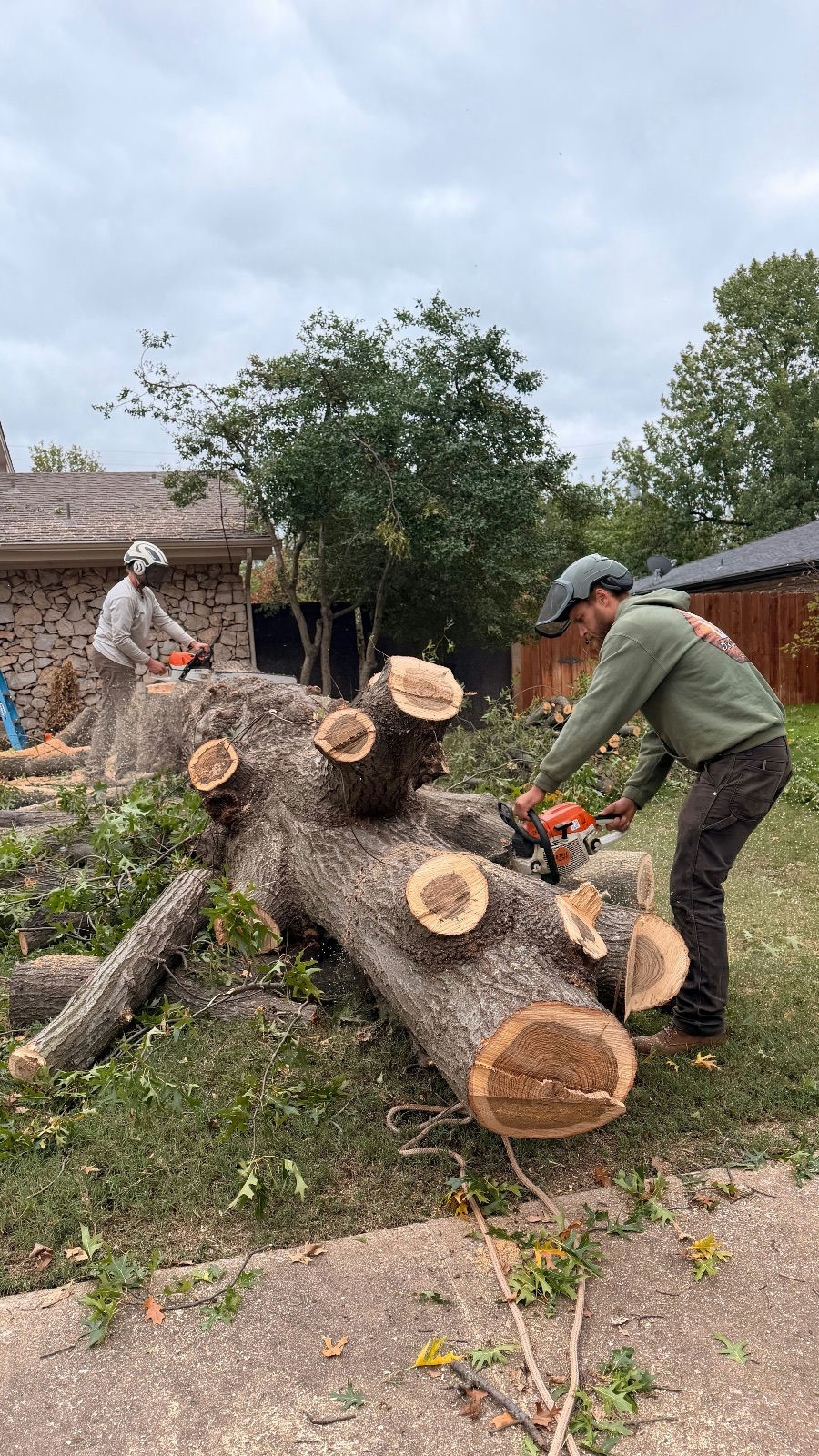
OAK DECLINE IN CENTRAL OKLAHOMA — WHAT HOMEOWNERS SHOULD WATCH FOR
Red oaks are common across Edmond and Oklahoma City, but environmental stress over recent years has made them vulnerable to opportunistic fungi, hypoxylon canker, and heart rot. Knowing the early warning signs helps you address problems before a tree fails over your home.
Bur Oak
A very tough native oak that handles Oklahoma clay, drought, and ice storms better than fast-growing varieties.
Shumard Oak
A great urban shade tree with a broad, sturdy canopy and solid resistance to local storm winds.
Chinkapin Oak
Upright grower with distinct star-shaped leaves and reliable yellow fall foliage, well-adapted to alkaline soils.
Oklahoma Redbud
Extremely resilient native small-to-medium tree that withstands extreme heat and erratic weather.
WARNING SIGNS OF INTERNAL TRUNK ROT
A tree does not need to look dead to be dangerous. Internal decay hollows out the structural core long before the leaf canopy collapses. If your mature oak shows any of these signs, have it checked out:
- Mushroom or conk growth (fungal fruiting bodies) along the root flare or trunk seams
- Crown dieback where upper branch tips fail to push out spring leaves
- Bark shedding in large sheets revealing brown or powdery black fungal mats underneath
- Deep vertical cracks or oozing sap wounds that attract insects
- Hollow sounds when tapping firmly on the lower trunk
- Heavy woodpecker activity concentrated along the main stem, signaling insect larvae deep in rotting wood
THE FINISH AND CLEANUP
Removing a tree this size generates yards of saw chips and heavy wood. We raked the turf, swept the paved walks and driveway, and hauled away the brush and split logs. The yard was left clear and usable, and the homeowners had the relief of knowing an unstable tree was gone before the next line of storms pushed through Edmond.
SEE ALSO
Need this kind of work at your place? Read more about professional tree removal in Edmond and Oklahoma City.
NEED A HAZARDOUS OAK REMOVED IN EDMOND?
Send us a couple photos of your tree and where it sits in your yard. We will take a look and give you an honest assessment.
Call or Text (405) 253-5232 Photo Estimate — 60 SecondsFrequently Asked Questions
Why did a pruning job turn into a full red oak removal?
We arrived near Oklahoma Christian University in Edmond for a standard canopy trim. Once the climber got into the crown, we found severe internal trunk rot spreading down through the core. Because the oak sat directly between two homes and a privacy fence, taking it down was the only safe call.
How can a red oak look healthy and still be unsafe?
Red oaks can keep green leaves growing from the thin outer sapwood even while the interior column has turned to mulch. The tree loses tensile strength without obvious cues to someone standing on the lawn.
Why wasn't the tree felled in one cut?
There was zero drop zone, with structures on multiple sides. Every piece had to be dismantled from the top down. The climber set high friction points, pieced out the canopy first, and dropped limbs onto protective plywood ground mats.