 Back to Featured Projects
This elm stood in a three-foot alleyway between a wooden privacy fence and a storage shed in Norman, Oklahoma. Dutch elm disease had already killed the canopy, leaving brittle limbs directly over both structures. We rigged it down section by section without touching the roof or the fence line.
WHAT THE HOMEOWNER WAS DEALING WITH
The tree had grown in a narrow slot between the homeowner’s storage shed and the neighbor’s wooden privacy fence. Over the summer, the canopy turned brown fast and dropped its leaves ahead of schedule. By early fall, the top was completely bare and dead.
The primary worry was property damage. When a tree sits less than two feet from a shed wall and right against fence pickets, there is zero margin for error. A falling limb could easily crush the shed’s eaves or bust through the fence panel, creating an uncomfortable dispute with next door. The homeowner needed the dead wood down before winter winds knocked pieces loose.
DUTCH ELM DISEASE IN A CONFINED SPOT
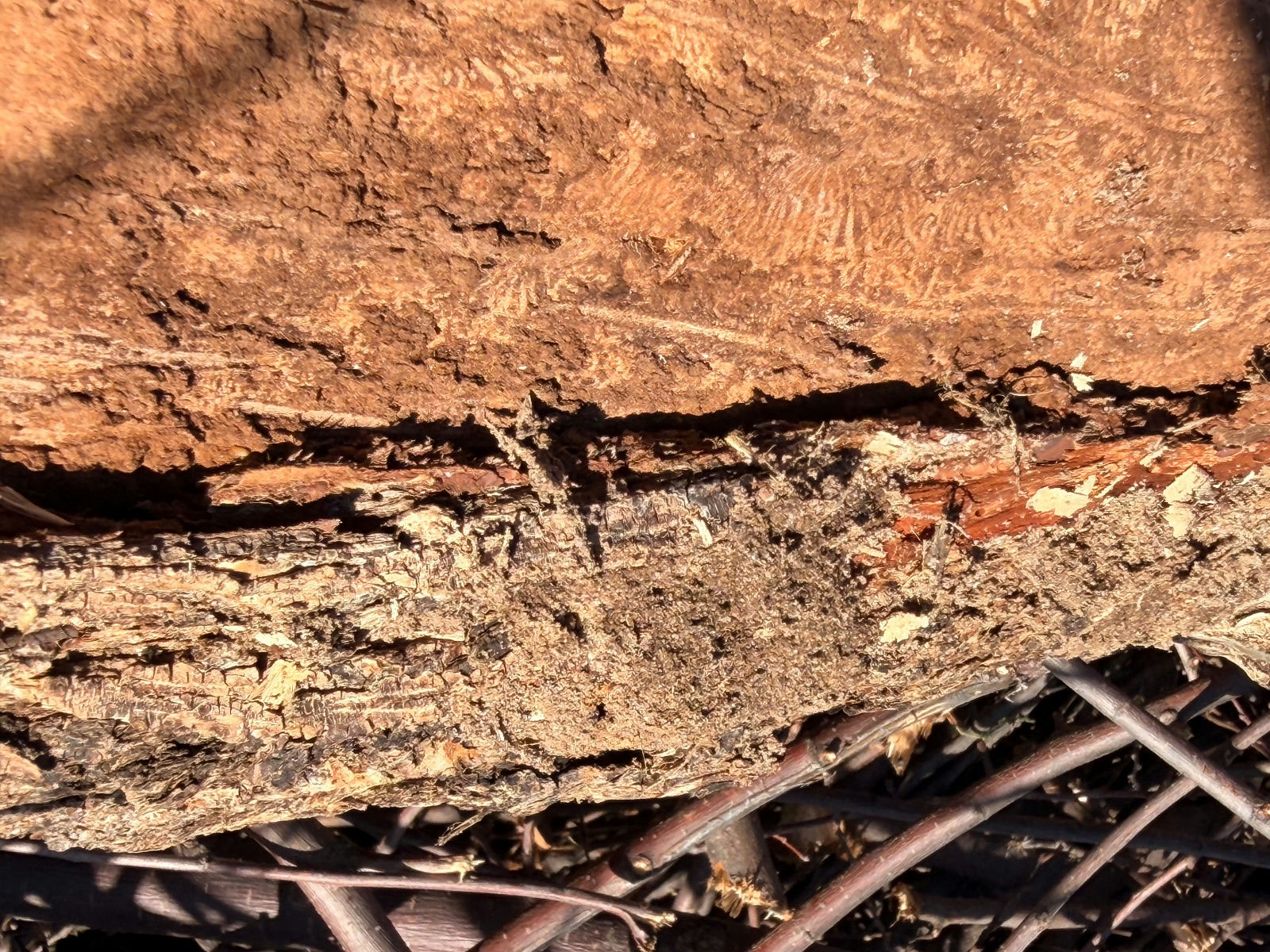
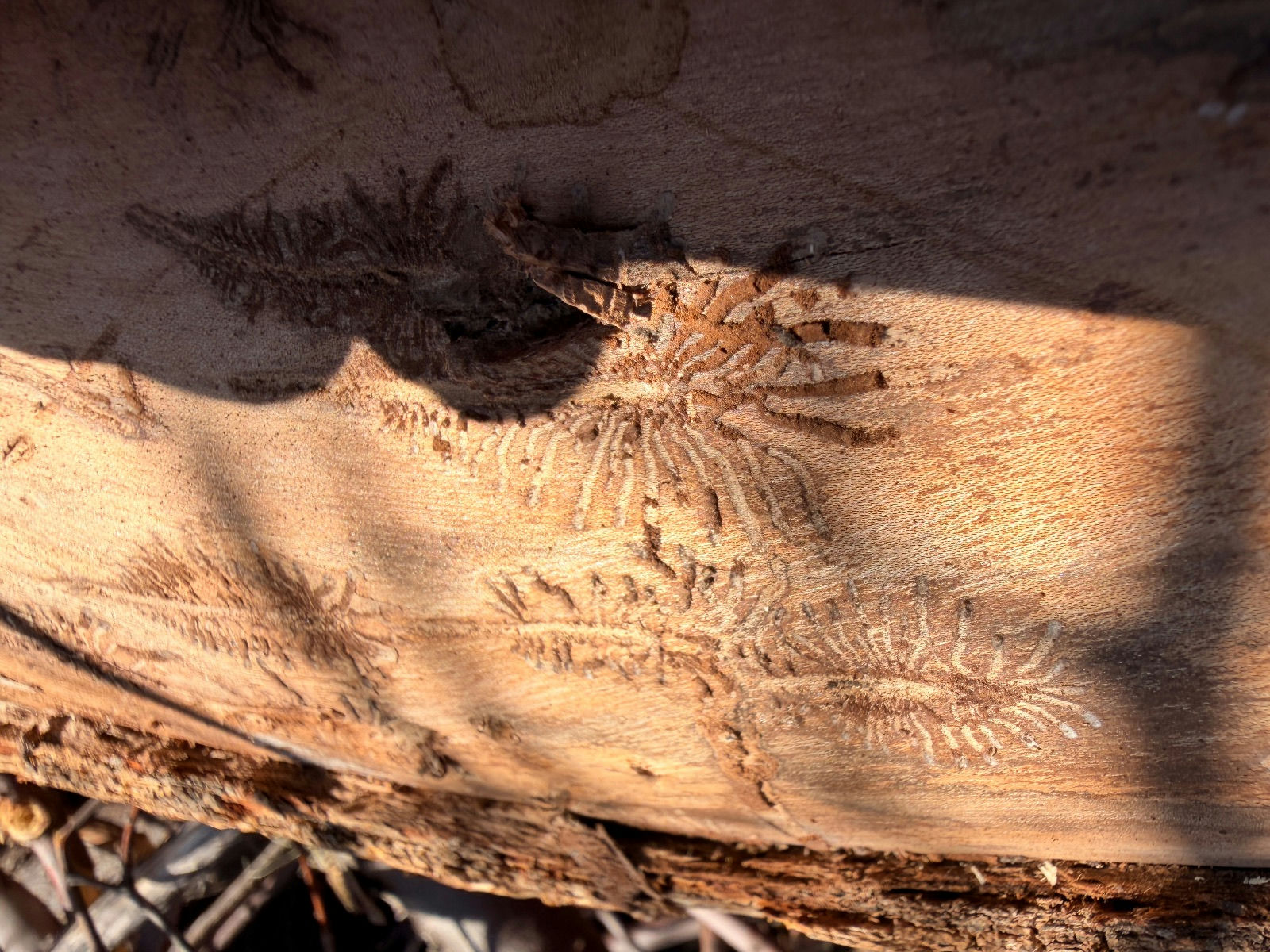
Once we pulled loose bark off the wood, the issue was obvious. The telltale galleries carved by elm bark beetles showed up clearly across the sapwood. Dutch elm disease is caused by an invasive vascular fungus carried by these beetles. As the fungus spreads, the tree plugs its own water-transport tubes to stop the infection, which chokes the crown and kills the canopy in a matter of weeks.
Dead elm wood dries out quickly in Oklahoma heat. Once the moisture leaves the branches, they lose their flex and turn brittle. Brittle wood does not bend when you put weight on it; it snaps. That makes climbing and rigging dead elms more delicate than green wood, especially in an alleyway where you cannot drop wood freely to the ground.
HOW WE RIGGED IT DOWN
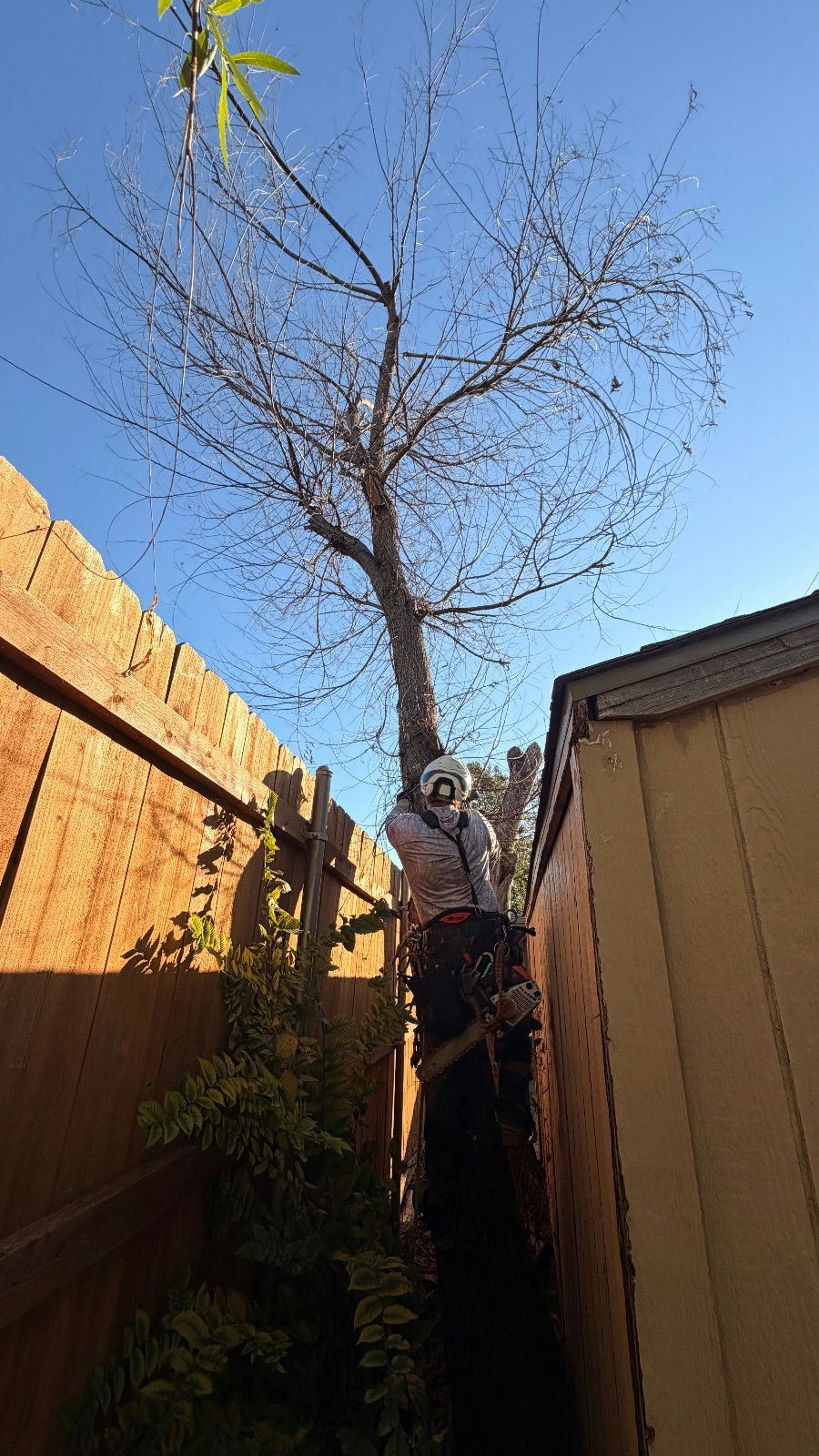
Heavy machinery like a crane or bucket truck could not reach this back corner without driving across soft turf and risking utility lines. We handled the entire removal on ropes and spurs. Our climber went up the trunk, establishing overhead rigging points to control every limb as it came off.
Each branch was cut into manageable pieces, tied off, and lowered straight down into the narrow corridor between the shed wall and the fence. Ground workers caught each section, untied it, and walked it out to the front yard. Once the canopy was clear, we pieced the main spar down in short log rounds, letting nothing hit the ground with force.
The Stihl saw stayed busy through the final base cut. We took the stump down as flush to grade as possible given the tight footing right beside the shed foundation.
HOW IT WRAPPED UP
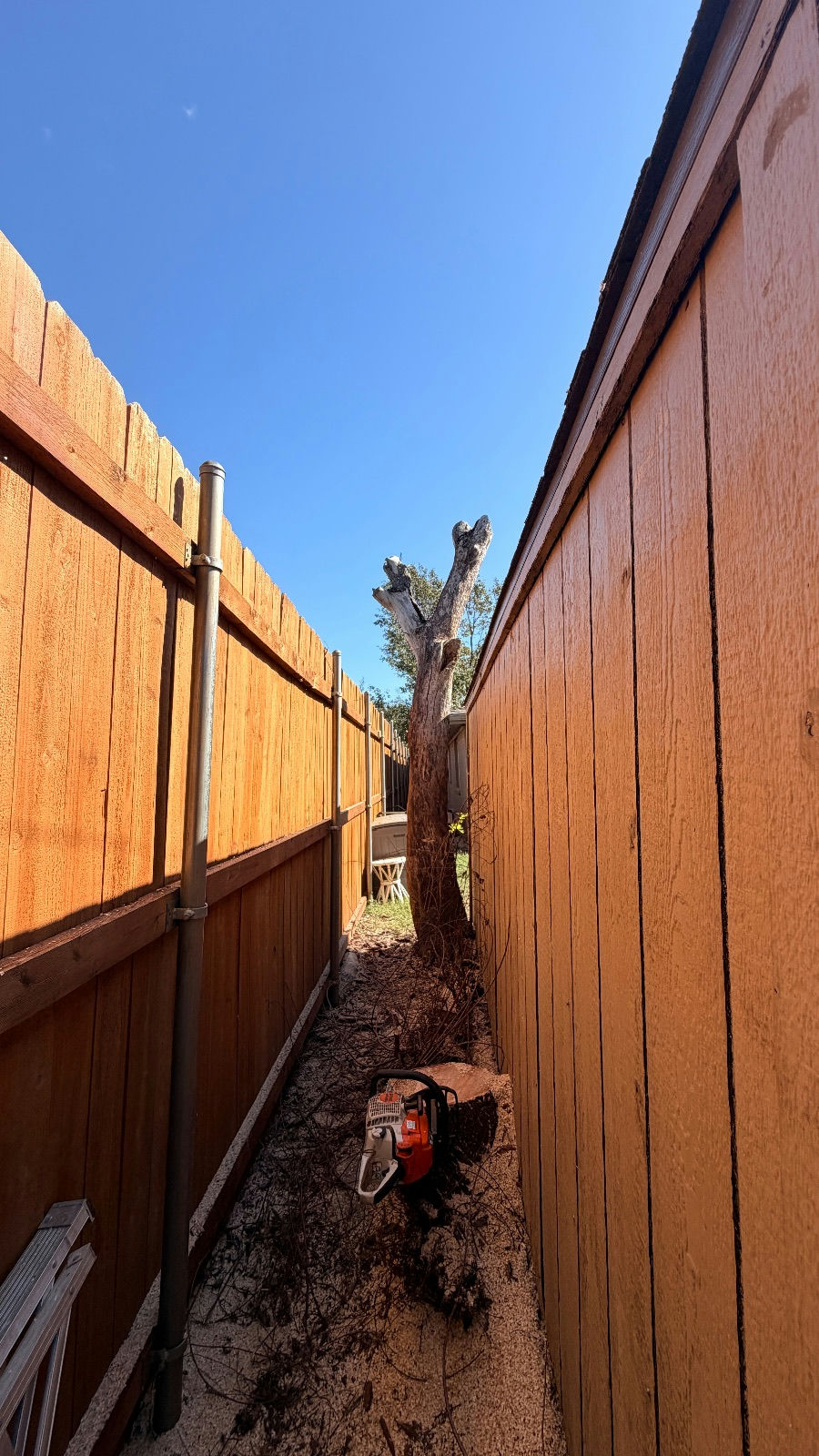
Neither the shed roof nor a single fence picket took a hit. We raked the mulch and sawdust out of the narrow corridor, hauled all the diseased elm wood offsite for disposal, and blew down the yard. The neighbor’s fence remained completely intact.
DUTCH ELM DISEASE AND ELMS IN CENTRAL OKLAHOMA
American elms were once planted heavily across Oklahoma neighborhoods because they grow fast and provide deep shade. Unfortunately, Dutch elm disease (DED) remains an active threat across Norman, Edmond, and Oklahoma City. Here are facts homeowners should keep in mind if they have mature elms on their property:
SPOTTING ELM DECLINE IN YOUR YARD
If you have an elm tree near your house, watching for early symptoms can save your property from sudden branch drops:
SEE ALSO
Need this kind of work at your place? Read more about professional tree removal in Norman and Edmond.
NEED A DEAD OR SICK TREE REMOVED FROM A TIGHT SPACE?
Send us a couple photos of the tree, fence, and access points. We will review the setup and give you a straightforward price.
Call or Text (405) 253-5232 Photo Estimate — 60 SecondsFrequently Asked Questions
Why did this Norman elm have to come down?
The elm stood in a three-foot alleyway between a wooden privacy fence and a storage shed. The canopy turned brown and dropped its leaves early, and by early fall the top was completely bare and dead.
What was wrong with the tree?
After pulling loose bark off the wood, we found galleries carved by elm bark beetles in the sapwood. Dutch elm disease is caused by an invasive vascular fungus those beetles carry, and as it spreads the tree plugs its own water-transport tissue.
How did you remove it in such a tight space?
A crane or bucket truck could not reach the back corner without driving across soft turf and risking utility lines. We handled the removal on ropes and spurs. The climber set overhead rigging points and lowered every limb so we would not touch the roof or the fence line.