 Back to Featured Projects
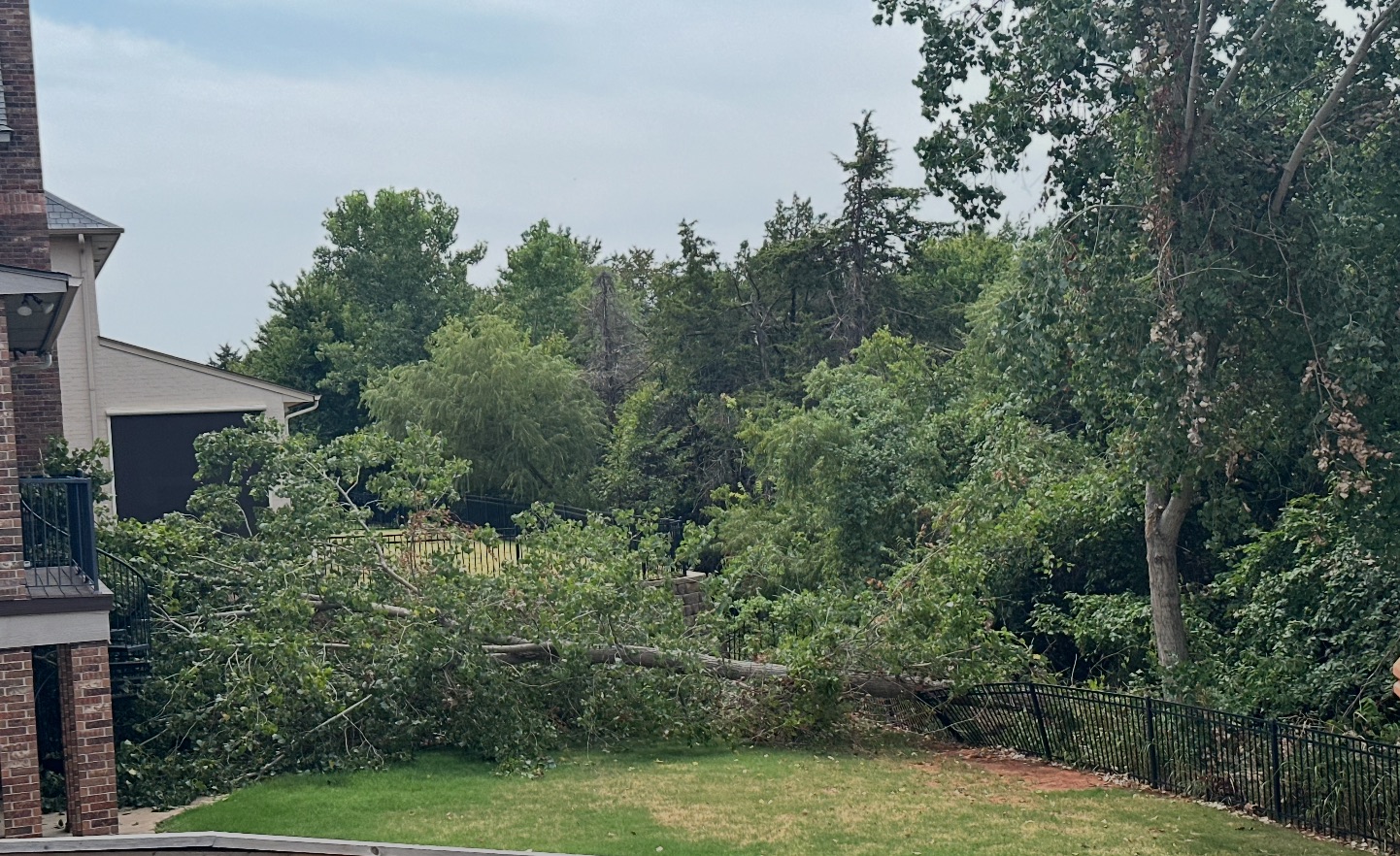
A homeowner in northern Oklahoma City was ready to list their property, but a substantial cottonwood tree suddenly appeared across their backyard. The culprit? A busy beaver. The situation called for immediate action to clear the property for potential buyers.
WHAT THE HOMEOWNER WAS DEALING WITH
Imagine preparing to put your home on the market, tidying up the yard, and then waking up to a massive tree lying across your fence. That was the reality for this homeowner in northern Oklahoma City. A large cottonwood had been expertly — if inconveniently — gnawed through by a beaver, falling squarely into their backyard. The clock was ticking to get the property presentable for showings.
THE PROBLEM: A BEAVER’S WORK
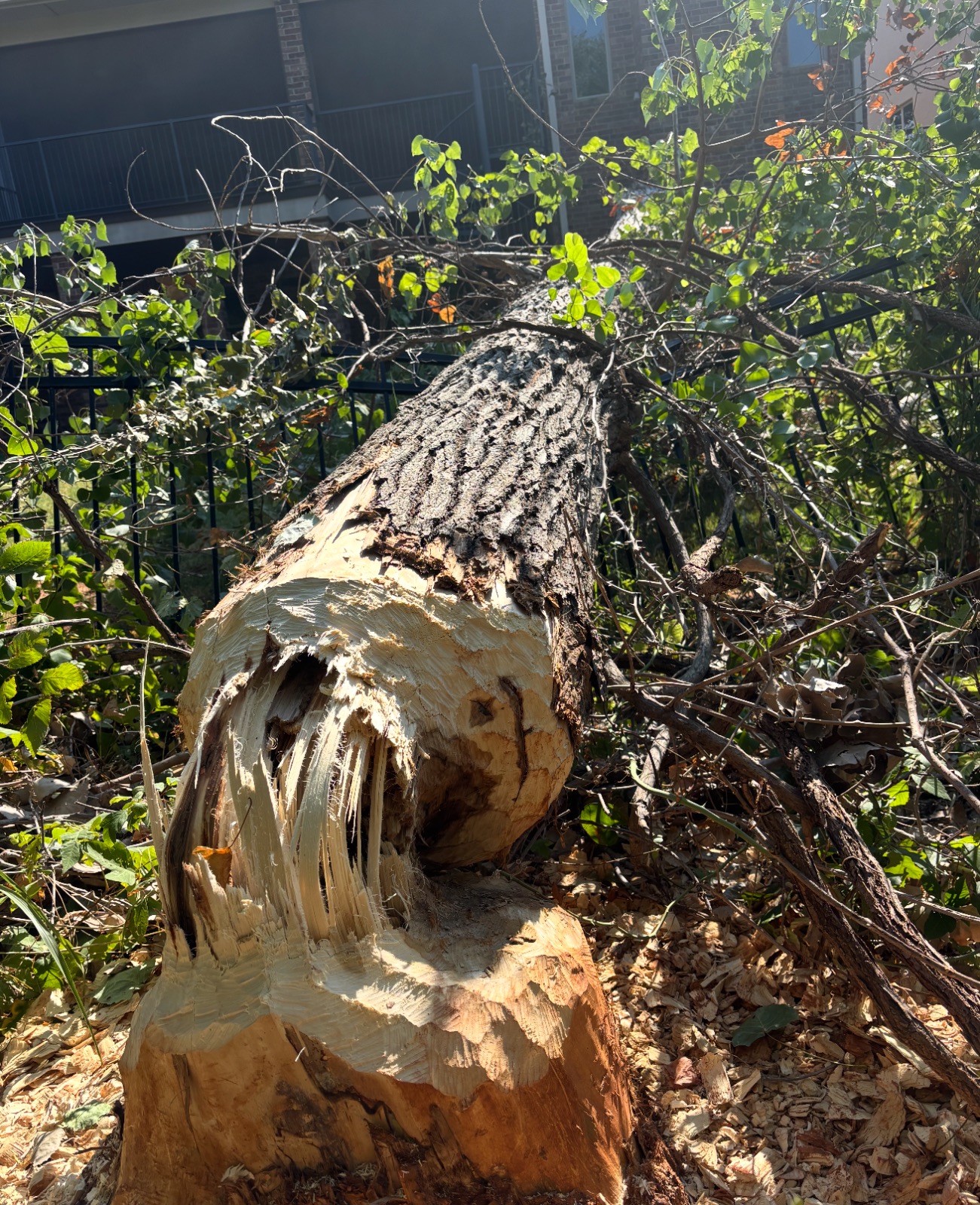
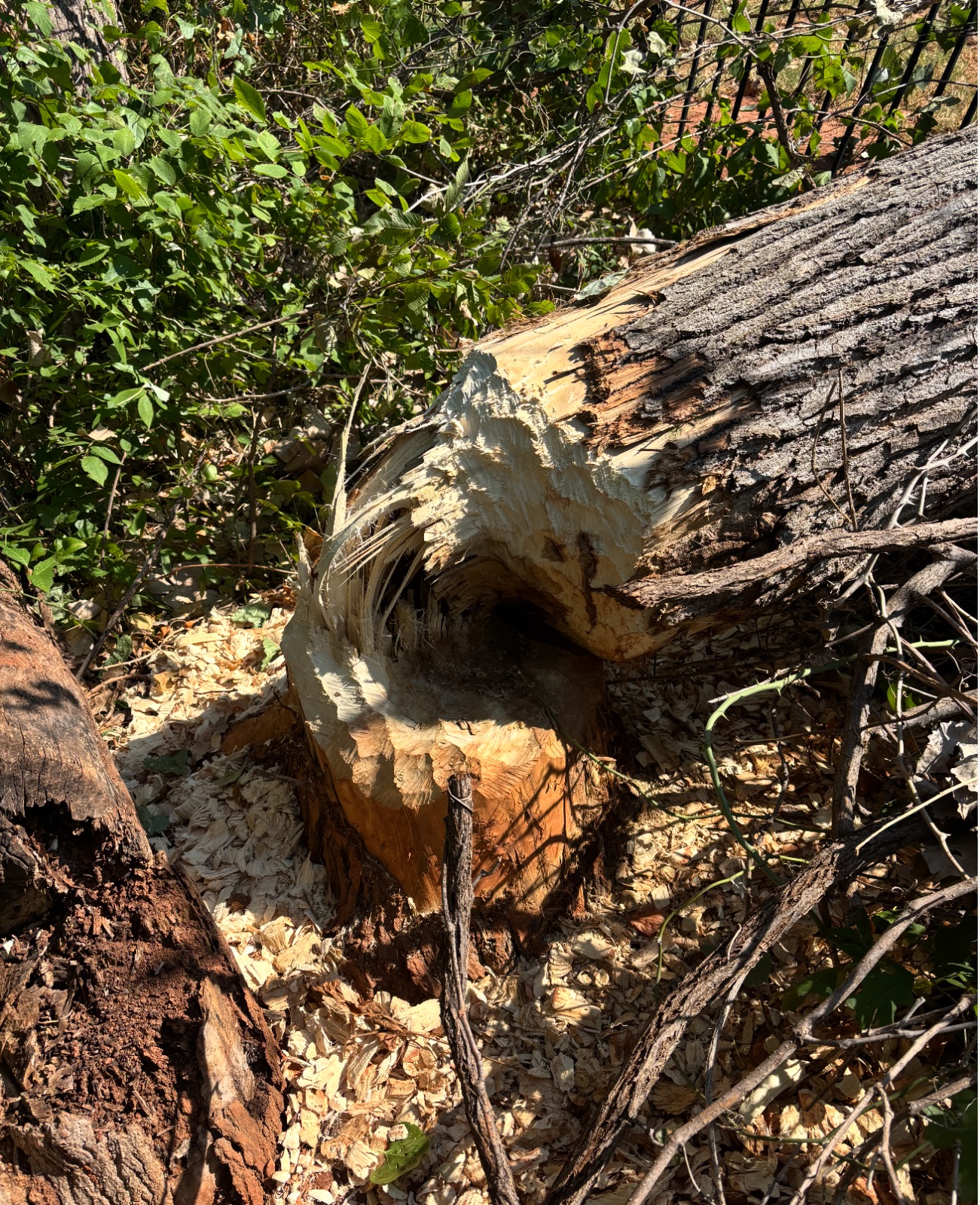
The distinct chew marks at the base of the trunk told the story: this wasn’t a storm, but an animal. Beavers are known for felling trees, especially softwoods like cottonwood, which they use for food and dam building. While impressive, a freshly felled tree makes a backyard unusable and unattractive, particularly for someone trying to sell their home. The homeowner needed a fast, complete cleanup.
Beyond the immediate aesthetic issue, a large fallen tree like this represents a number of hazards. It was blocking access, damaging the fence, and creating a trip hazard. If left, it could also attract pests or further damage the property over time. The priority was safe and efficient removal.
HOW WE APPROACHED IT
Our team responded the very next day. The cottonwood was large and unwieldy, but its relatively soft wood made the cutting process more manageable. We systematically sectioned the trunk and limbs, carefully working to avoid further damage to the existing fence or the landscaping.
The goal was not just to remove the tree, but to restore the backyard to a clean, market-ready condition. This meant meticulous debris removal, ensuring no wood chips or small branches were left behind. The job required precision and efficiency to meet the homeowner’s tight schedule.
THE RESULT
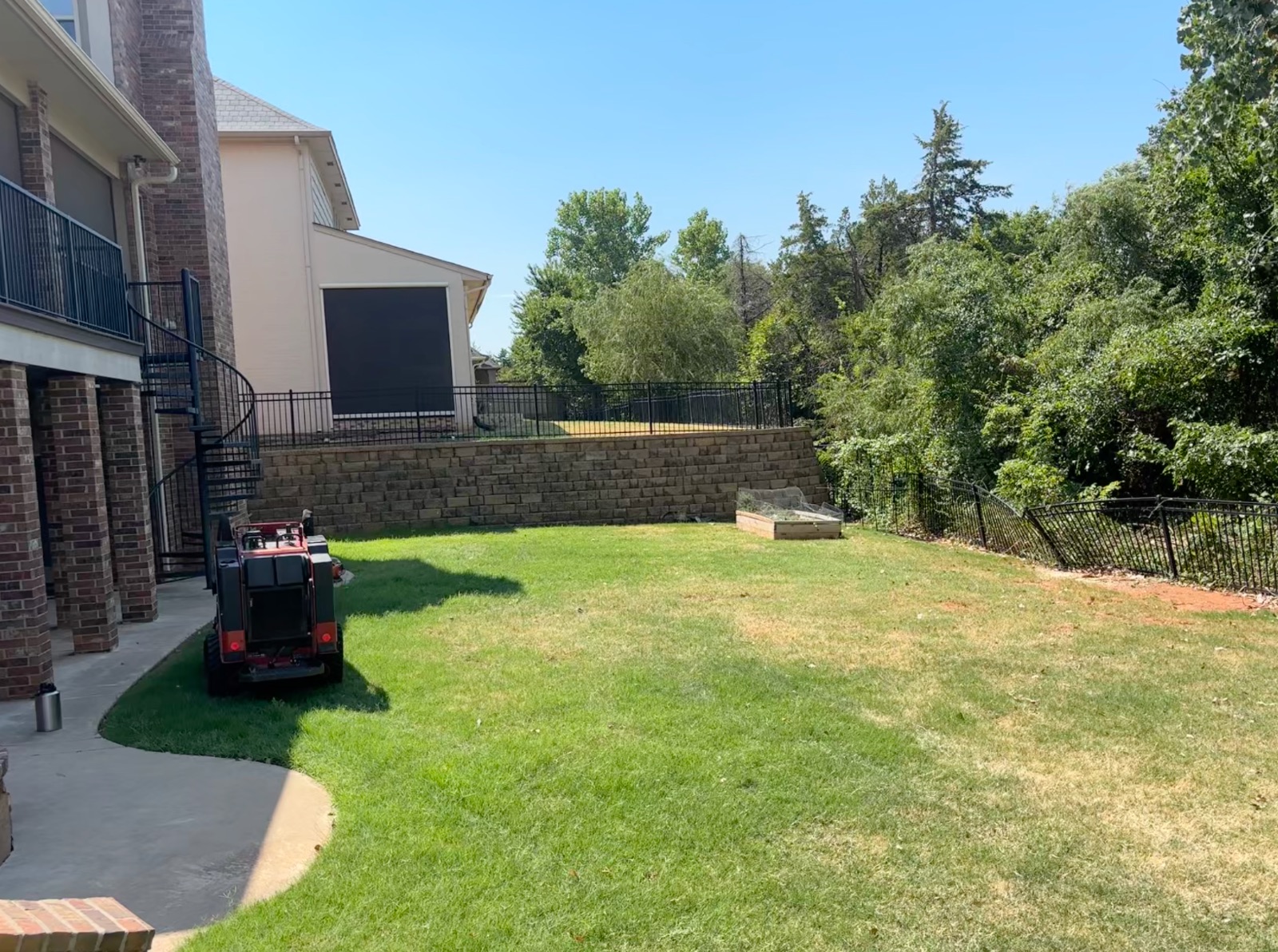
Within a day, the backyard was clear. The felled cottonwood was gone, and the property was once again ready for prospective buyers. The homeowner could move forward with their plans without the unexpected obstacle of a beaver’s handiwork. We ensured the area was clean, leaving behind no trace of the large tree or our work.
COTTONWOOD TREES IN OKLAHOMA
Cottonwoods (Populus deltoides) are common in Oklahoma, especially near water sources like rivers and creeks. They are fast-growing and can reach impressive sizes quickly. However, they are also known for their soft, brittle wood, which makes them susceptible to damage from wind, ice storms, and, as this case proves, beavers.
While their rapid growth provides quick shade, their wood density means they are not as structurally sound as hardwoods. They often drop branches and can be prone to trunk decay, particularly as they age. For homeowners, this can translate to more frequent storm cleanup or the need for professional assessment if a cottonwood shows signs of distress. Not all cottonwoods are problematic, but their characteristics warrant careful consideration, especially if they are near structures or high-traffic areas.
- Fast-growing, often found near water.
- Soft, brittle wood makes them prone to limb breakage.
- Susceptible to damage from wind, ice, and animal activity.
- Can reach large sizes quickly, offering rapid shade.
- Often experience decay as they age.
- Not ideal for planting near homes or structures due to weak wood.
- Considered a
Redbud
A native Oklahoma tree, smaller in stature, with beautiful spring blossoms and good structural integrity.
Oak (Bur Oak, Chinkapin Oak)
Slower growing but very strong, long-lived, and drought-tolerant once established. Excellent shade trees.
Cedar Elm
Tolerant of a wide range of conditions, strong wood, and provides good shade without the brittleness of cottonwood.
Lacebark Elm
Attractive exfoliating bark, good form, and relatively problem-free in Oklahoma’s climate.
Osage Orange (Bois d’Arc)
Extremely tough, durable wood. Often used for windbreaks or hedging due to its resilience.
SEE ALSO
Need this kind of work at your place? Read more about emergency tree removal in Edmond and Oklahoma City.
NEED EMERGENCY TREE REMOVAL?
When unexpected tree issues arise, fast response is critical. Send us a photo for a quick estimate on emergency tree service.
Call or Text (405) 253-5232 Photo Estimate — 60 SecondsFrequently Asked Questions
Why was this an emergency call?
A homeowner in northern Oklahoma City was getting ready to list the house when a beaver gnawed through a large cottonwood and dropped it into the backyard and across the fence. The property needed to be presentable for showings.
How did you know a beaver caused it?
Distinct chew marks at the base of the trunk showed this was not a storm failure. Beavers often fell softwoods like cottonwood for food and dam building.
How quickly was it cleaned up?
The crew responded the next day, sectioned the relatively soft cottonwood trunk and limbs, and worked carefully to avoid further damage to the fence or landscaping.