 Back to Featured Projects
A beaver chewed through the base of a tall cottonwood tree along a greenbelt creek in North Edmond’s Tall Oaks neighborhood, dropping it directly into the wrought iron fence line. The property owner was left with a heavy, tensioned trunk resting on crushed fencing and hanging over the yard. We sectioned the downed tree, relieved the load safely, and moved everything out with light turf machinery to keep the grass intact.
WHAT THE HOMEOWNER WAS DEALING WITH
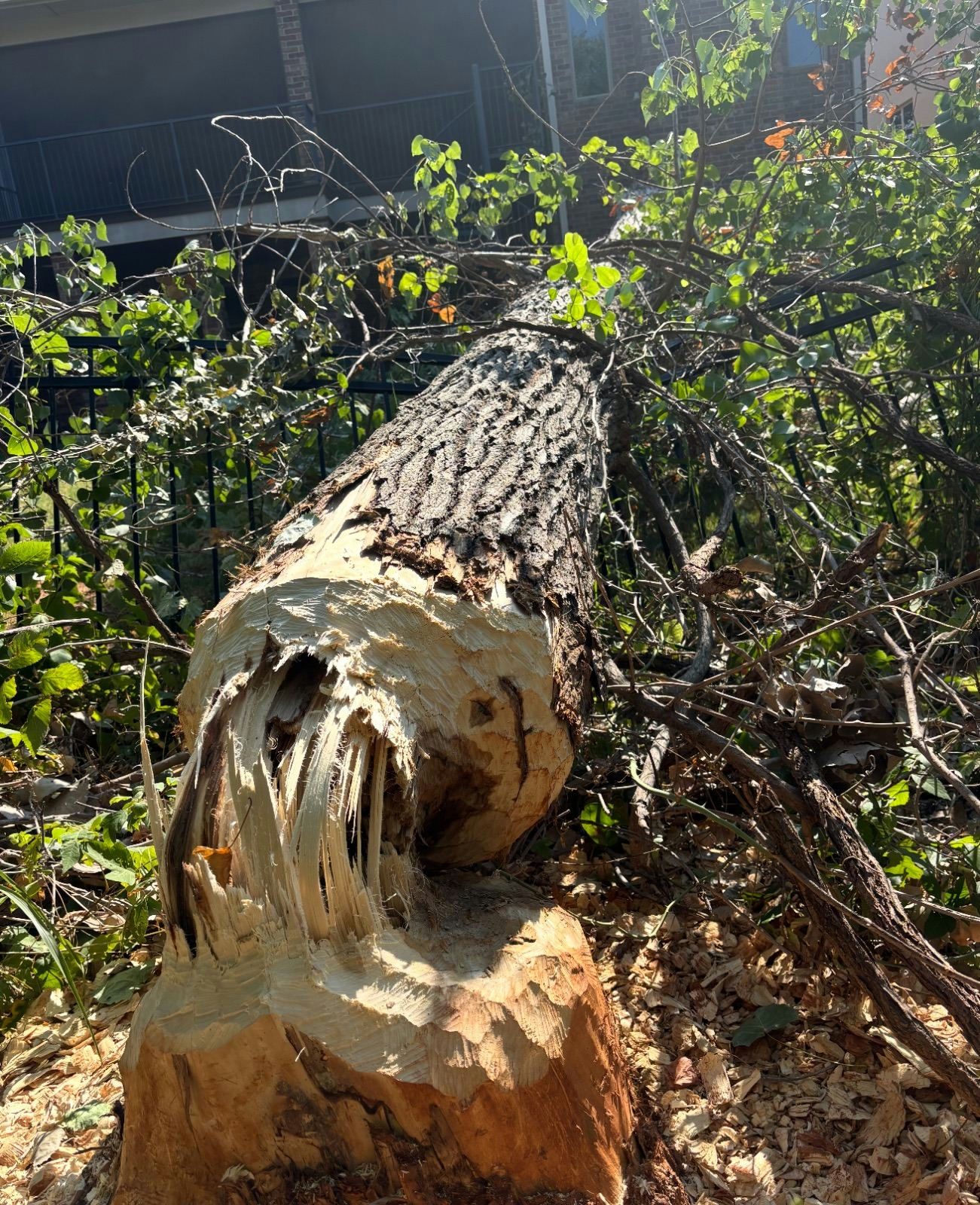
Most people expect storm winds or heavy ice to drop a tree in Oklahoma. In the Tall Oaks neighborhood in North Edmond, the culprit was wildlife. A beaver came up from the nearby creek drainage, chewed a conical notch through the entire trunk of a mature cottonwood, and brought the whole thing down.
The tree crashed across the black wrought iron fence separating the turf yard from the wooded easement behind the retaining wall. The homeowner walked out into their backyard to find crushed metal panels, a heavy log under immense tension, and a tangled canopy filling the corner of their property. Their main concerns were straightforward: how to get that tree off the fence without collapsing the rest of the iron, and whether heavy equipment would tear up their finished lawn.
THE DANGER OF BEAVER-FELLED TREES
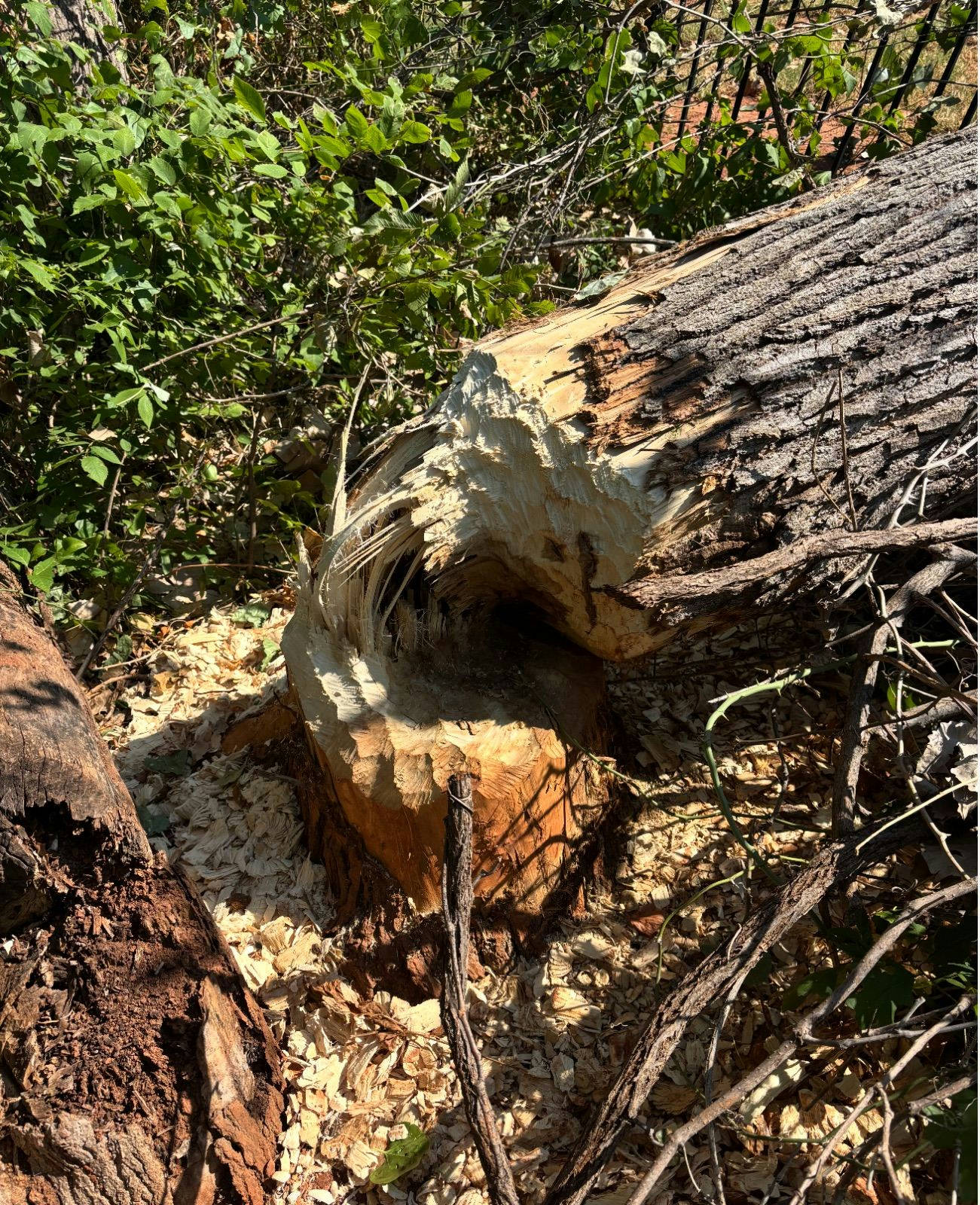
When an arborist cuts down a tree, we establish a controlled hinge, establish an open face notch, and use wedge pressure to govern exactly where and how that log lands. Beavers do not follow safety standards. They chew in an hourglass ring until gravity snaps whatever thin strip of wood fiber remains.
That creates an unstable, jagged failure point known as a barber chair or tear-out. In this case, the trunk had splintered and kicked back, leaving long, pressurized wood fibers still partly tethered to the stump. The main weight of the cottonwood was resting on bent fence rails and the grade below. When you touch a chainsaw to a tree resting in that kind of bind, the stored energy can kick violently in any direction. Cutting it without understanding reactive wood tension is an easy way to damage property or get hurt.
HOW WE APPROACHED THE REMOVAL
Before making a single cut, we evaluated where the compression wood and tension wood were sitting. The fence line was pinned beneath the mid-trunk, meaning if we cut the log in the wrong sequence, the trunk would drop hard and finish bending the remaining fence posts, or snap upward toward the worker.
We started at the canopy tips, relieving top-end weight branch by branch. Once the canopy brush was reduced, we worked from the lighter end back toward the trunk, using small relief cuts on the compression side followed by severance cuts on the tension side. This let each log segment drop cleanly without binding the saw bar or whipping sideways.
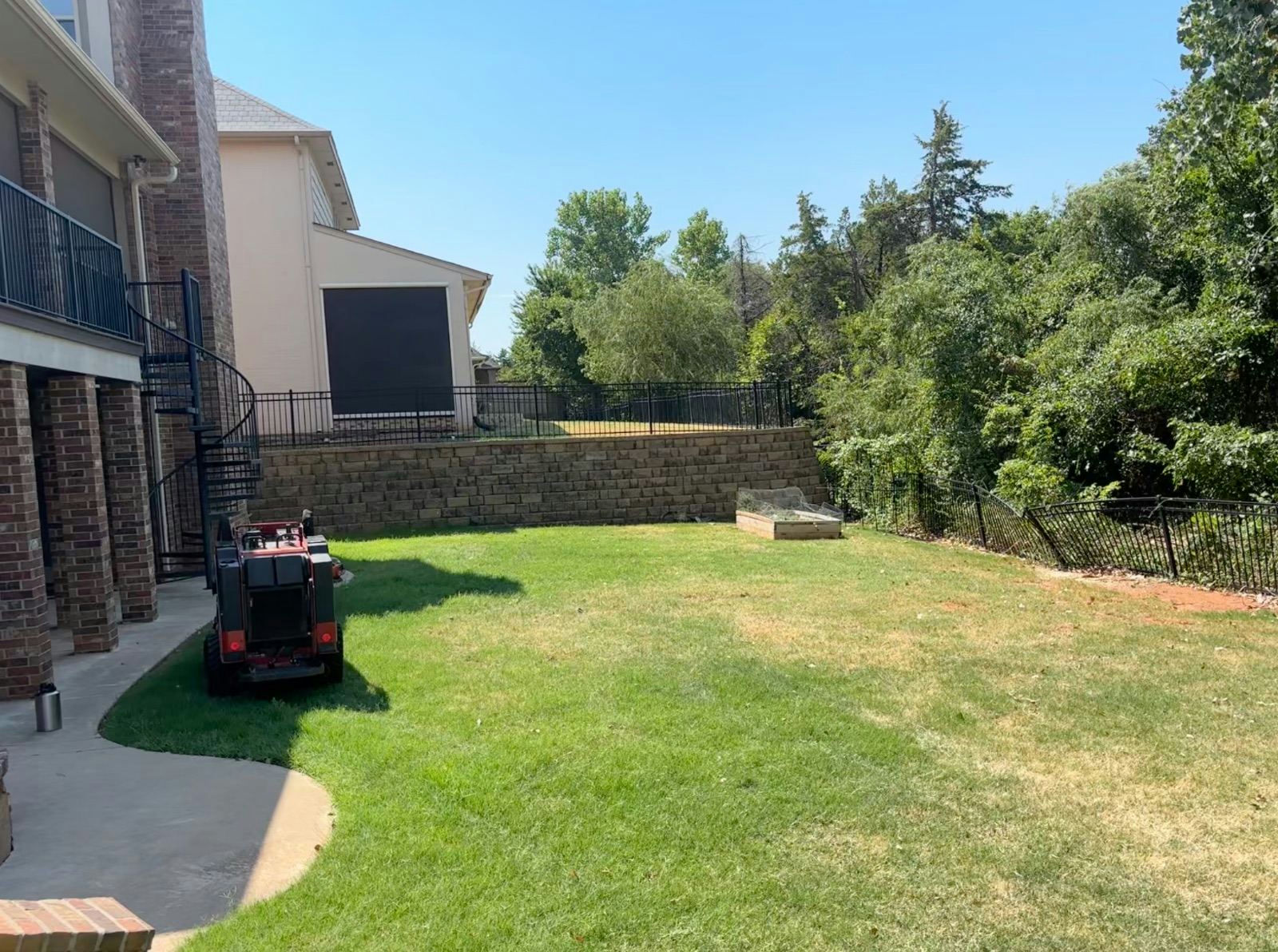
To haul the heavy cottonwood rounds out of the backyard, we ran our compact mini skid steer. Because it rides on low-ground-pressure turf tracks, we were able to shuttle tons of green wood across the lawn without leaving deep ruts or tearing the sod, as seen in the wide yard photo once the cleanup was complete.
THE RESULT
The fallen cottonwood was completely cut down, processed, and hauled away. With the weight lifted, the fence line was left clear so the fence contractor could easily replace the damaged sections. We raked up the wood chips, beaver shavings, and twig debris, leaving the lawn clean and open. What started as an unexpected morning shock was resolved in a few hours without any secondary damage to the home or retaining wall.
COTTONWOOD TREES AND BEAVERS IN CENTRAL OKLAHOMA
Cottonwoods (*Populus deltoides*) are fast-growing natives common along creeks, retention ponds, and greenbelts throughout Edmond and the OKC metro. They serve a real purpose in natural waterways, but when they sit along residential property lines, they bring unique challenges.
If your property backs up to a creek, pond, or greenbelt in Oklahoma, here is what you should know about cottonwoods and local beaver activity:
PROTECTING CREEK-SIDE TREES IN EDMOND
If your home backs up to a creek drainage in neighborhoods like Tall Oaks, Coffee Creek, or Oak Tree, regular visual inspections along your boundary line can save you thousands in fence and landscape repairs. Look for fresh white wood chips at the base of your trees and scalloped tooth marks into the bark. Spotting beaver damage early lets you cage the trunk before the tree falls into your fence or swimming pool.
- Cottonwood is soft and sweet: Beavers prefer cottonwoods, willows, and sweetgums because the bark is nutrient-dense and the soft wood is easy on their teeth.
- Beavers target trees surprisingly far from water: While they stay close to creeks, hungry beavers will easily travel 50 to 100 feet uphill into manicured lawns to harvest a tree.
- Hourglass girdling kills trees even if they don’t fall: Sometimes beavers chew a ring around the trunk and abandon it. Even if the tree stays standing, girdling destroys the vascular cambium layer and the tree will starve and die.
- Cottonwood wood is exceptionally heavy when green: Cottonwood holds an enormous volume of water. A freshly fallen log weighs significantly more than oak or pine of the same volume, making manual dragging unrealistic.
- Rot sets in fast: Cottonwood wood has minimal natural decay resistance. Once down, it rots and attracts wood-boring insects rapidly if not cleared.
- Hardware cloth provides reliable protection: If you live along a greenbelt and want to keep your creek-side trees, wrap the lower 36 inches of the trunks with heavy-gauge welded wire mesh. Chicken wire is too thin; beavers will chew right through it.
SEE ALSO
Need this kind of work at your place? Read more about fallen tree removal and emergency service in Edmond and Oklahoma City.
NEED A DOWNED TREE REMOVED QUICKLY?
Send us a couple photos of the fallen tree or damaged fence line. We will give you an honest price and handle the cleanup without tearing up your lawn.
Call or Text (405) 253-5232 Photo Estimate — 60 SecondsFrequently Asked Questions
What brought the cottonwood down in Tall Oaks?
A beaver came up from the nearby creek drainage in North Edmond's Tall Oaks neighborhood and chewed a conical notch through the trunk of a mature cottonwood, dropping it onto the wrought iron fence line.
Why couldn't the tree just be cut where it lay?
The fence line was pinned beneath the mid-trunk. Cutting the log in the wrong sequence could drop the trunk harder and finish bending the remaining fence posts, or snap it upward toward the crew. We evaluated compression and tension wood before making a cut.
How was the debris moved out of the yard?
We sectioned the downed tree, relieved the load safely, and moved everything out with light turf machinery to keep the grass intact.