 Back to Featured Projects
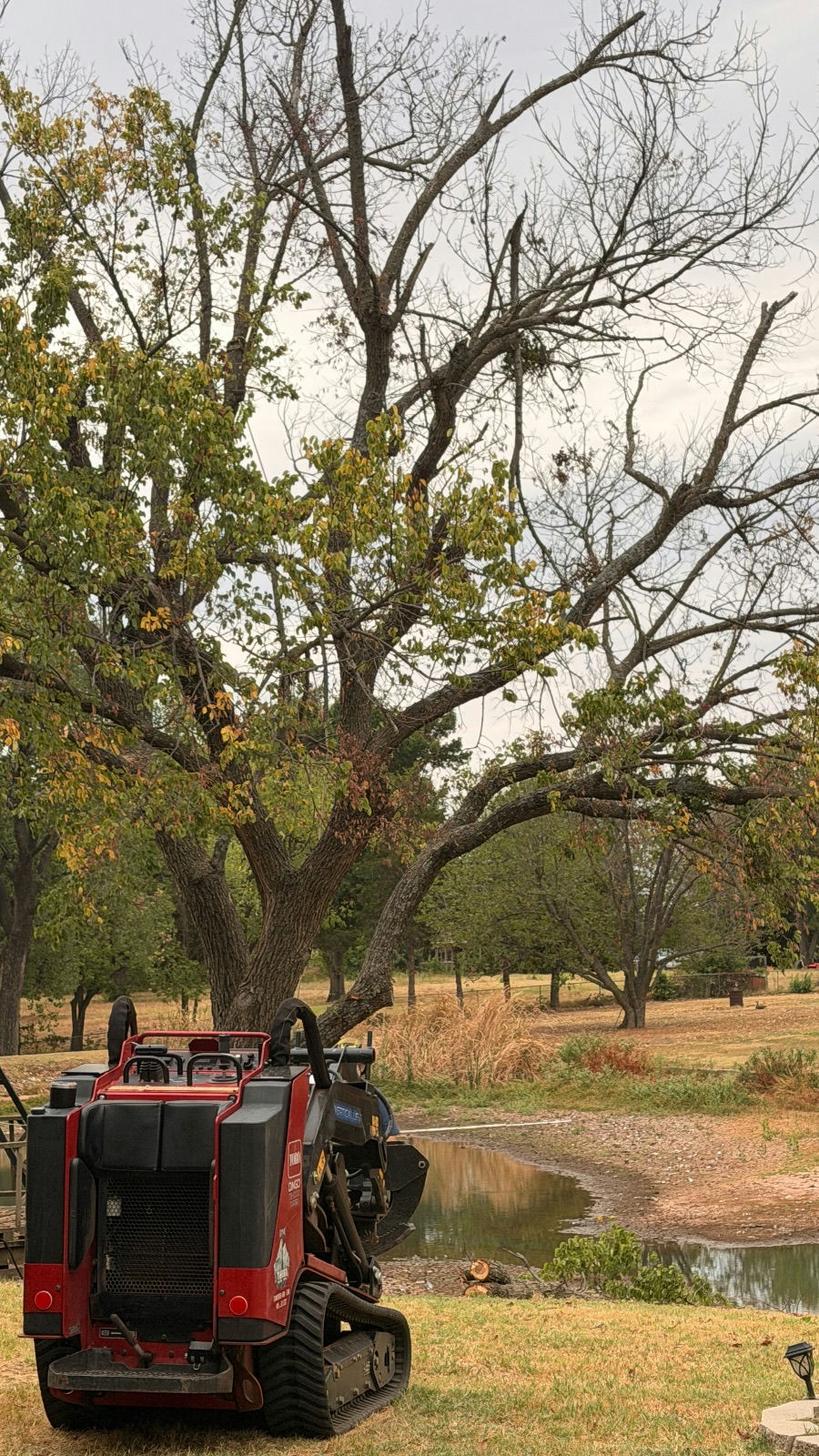
A homeowner in North Oklahoma City needed a very large American Elm tree removed. It was leaning over their pond, creating a challenge for removal. This wasn’t a simple job; it required careful planning and skilled equipment operation to ensure everything went smoothly.
WHAT THE HOMEOWNER WAS DEALING WITH
This American Elm was more than just a large tree; it was a fixture in the yard, but also a growing concern. Situated right next to the homeowner’s pond, its size and proximity meant any failure could damage the water feature or surrounding property. The concern wasn’t just about the tree itself, but about the risk it posed to a beloved part of their landscape.
THE PROBLEM WITH LARGE ELMS
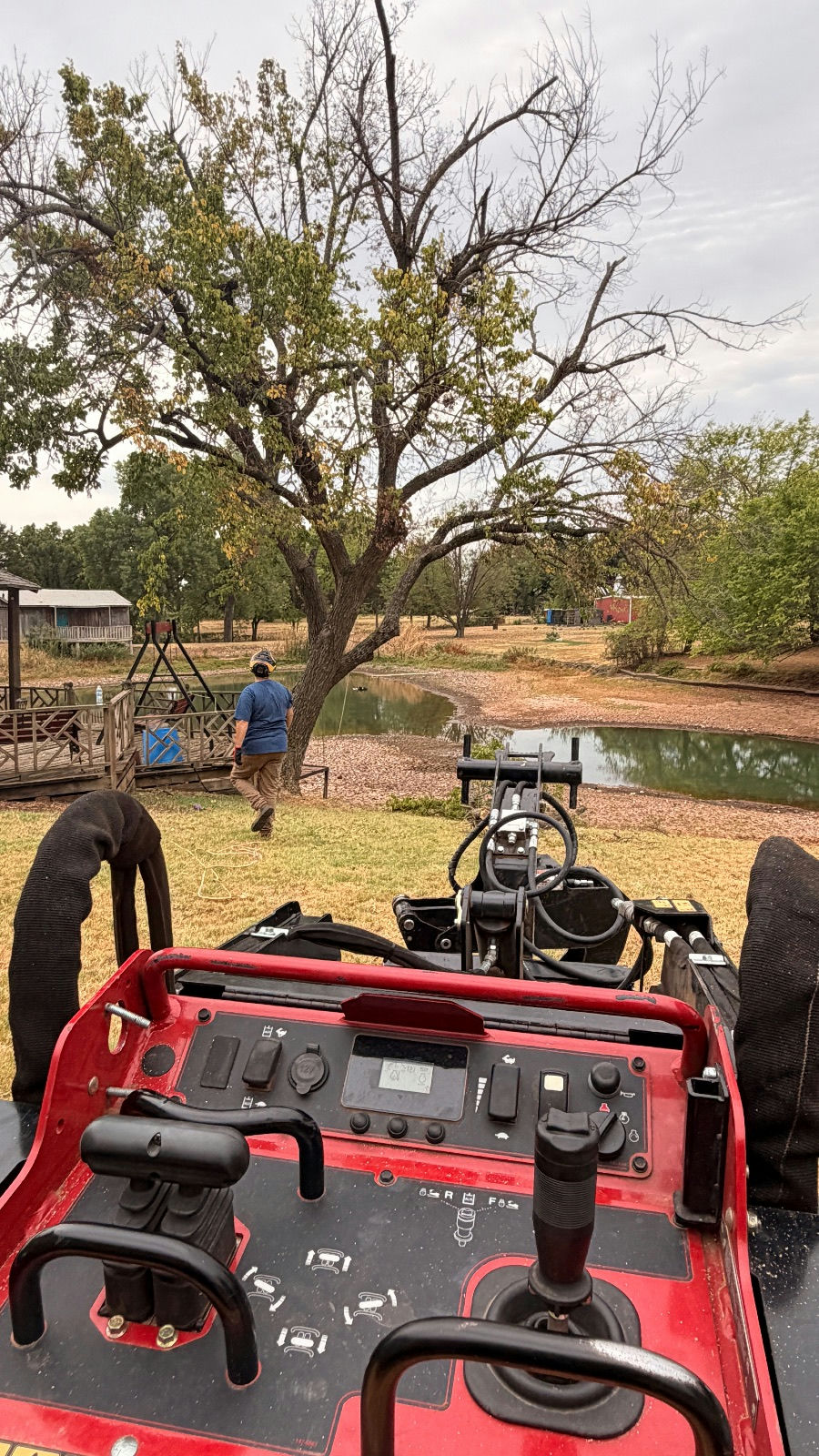
American Elms can grow to impressive sizes, often reaching 70 feet tall or more. While beautiful, large elms, especially those showing signs of decline like sparse canopy or dead branches, can become liabilities. Their sheer weight and expansive canopies mean that when they fail, the damage can be significant. Removing such a large tree, particularly near a water feature, requires a precise approach to control its fall and manage debris.
The ground around the pond was also a factor. Wet or soft soil can complicate heavy equipment use, increasing the risk of getting stuck or damaging the landscape if not handled carefully. This wasn’t a job for just any crew; it called for a team with experience navigating complex terrains and handling large tree removals safely.
HOW WE APPROACHED THE REMOVAL
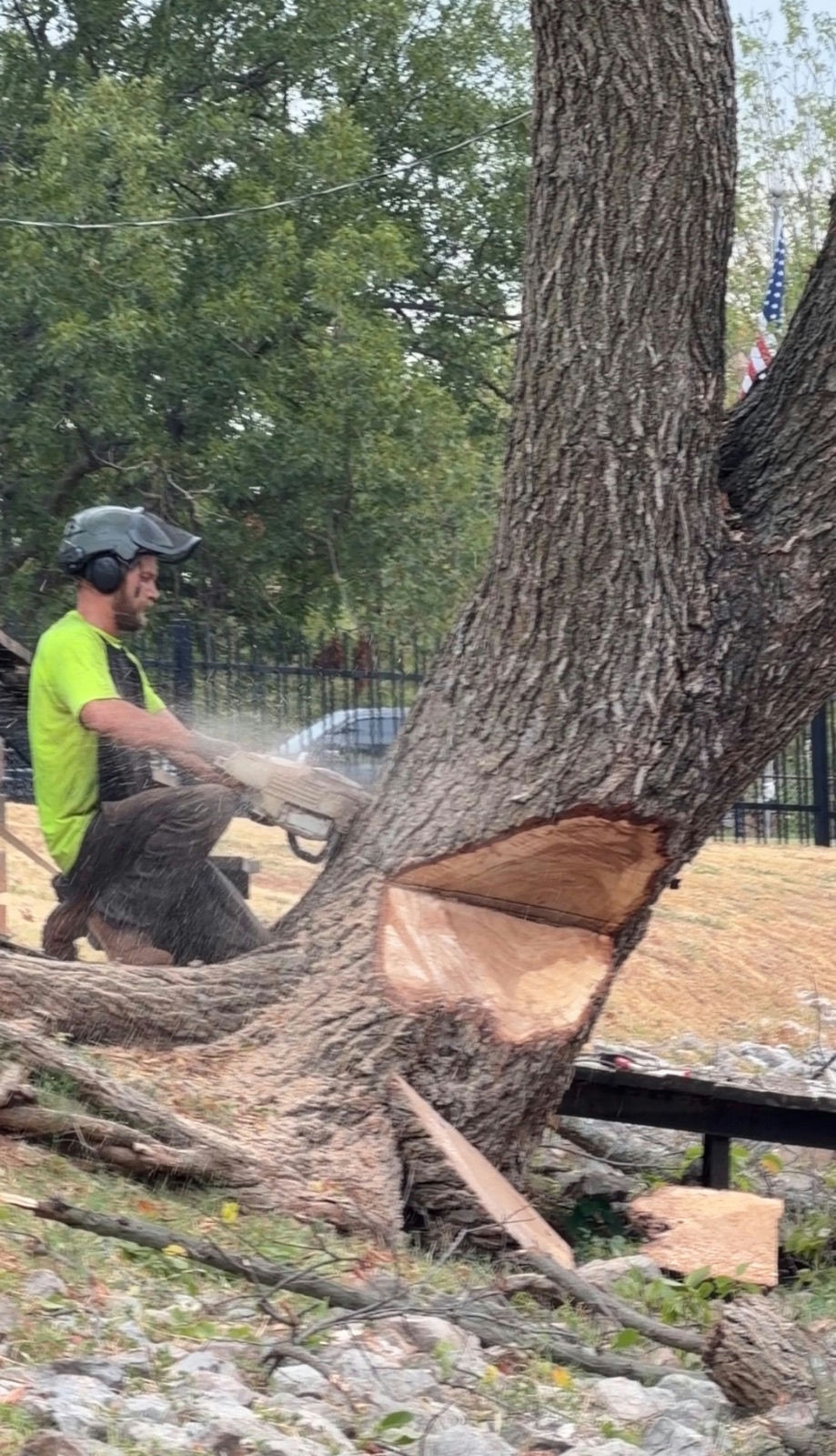
Our team assessed the tree’s structure and the surrounding environment, noting its lean towards the pond. The primary goal was to take it down without disturbing the pond or the homeowner’s nearby patio area. This involved a combination of strategic felling and careful sectioning.
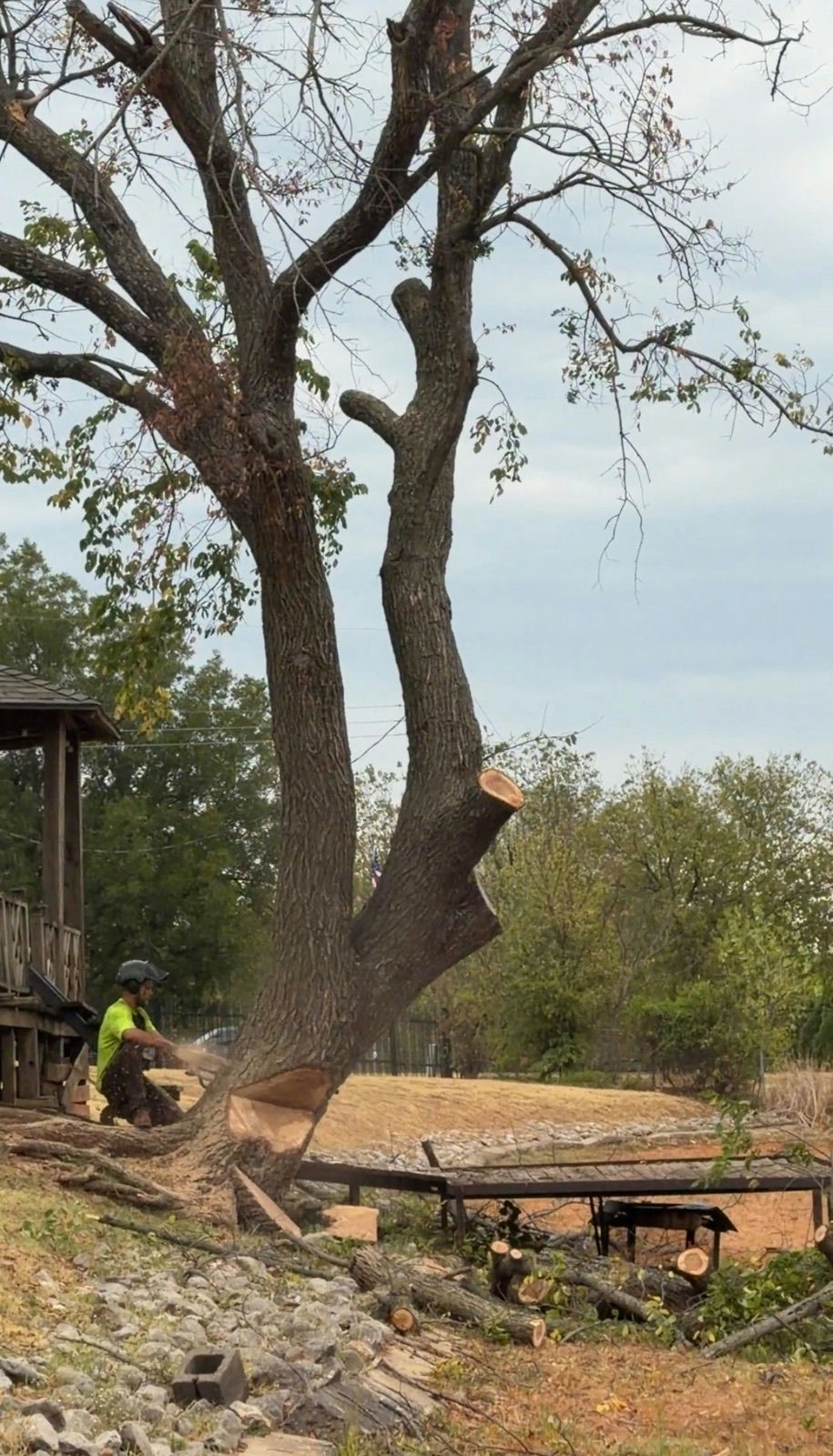
Using chainsaws and precise cuts, our arborist began the felling process, guiding the tree’s fall away from the water. A skid steer was then brought in, not just for moving logs, but for its compact maneuverability in the challenging terrain near the pond. Its tracks distribute weight more evenly than wheels, reducing the chance of rutting or getting bogged down in softer soil. This allowed us to efficiently remove the large sections of the elm while protecting the homeowner’s property.
THE RESULT
Once the tree was safely on the ground and cut into manageable pieces, our crew used the skid steer to haul away all the wood and debris. We ensured the area around the pond was clean and free of sawdust or wood chips. The homeowner was left with a clear space, free from the worry of the large elm impacting their pond, and with their landscape intact.
AMERICAN ELMS IN OKLAHOMA — A MIXED BAG
The American Elm, *Ulmus americana*, was once a dominant shade tree across much of the United States, including Oklahoma. Its distinctive vase shape and quick growth made it popular. However, the introduction of Dutch Elm Disease (DED) in the mid-20th century decimated populations, making healthy mature specimens increasingly rare. While some disease-resistant cultivars exist, many older, large elms can still fall victim to DED or other stressors that lead to decline. Removing a declining elm, especially one in a critical location, often becomes a necessity.
It’s worth noting that not all elm issues are DED. Oklahoma’s climate can stress many trees. Drought, soil compaction, and general aging can weaken elms, making them prone to limb failure. If you have a large elm, especially one showing significant deadwood or a thinning canopy, it’s prudent to have it inspected. The cost of proactive removal is often less than the damage from an unexpected limb or tree failure.
- American Elms are susceptible to Dutch Elm Disease (DED), though some resistant varieties exist.
- Mature elms can reach heights of 70 feet or more, creating significant falling hazards when in decline.
- Signs of decline include sparse canopy, dead branches, yellowing leaves out of season, and cankers on the bark.
- DED can cause rapid wilting and death, often starting in one part of the tree and spreading.
- Oklahoma’s heat and drought conditions can further stress elms, weakening their structure.
- Proximity to structures, driveways, or ponds increases the risk and complexity of removal.
- Regular inspections can help identify problems early, potentially mitigating risks.
- Older elms often have weak wood, making them prone to limb breakage, especially in storms.
SEE ALSO
Need this kind of work at your place? Read more about tree removal in Oklahoma City and Norman.
GOT A LARGE, CHALLENGING TREE TO REMOVE?
If you have a challenging tree removal project in North Oklahoma City, send us a photo. We can provide a clear estimate for the work.
Call or Text (405) 253-5232 Photo Estimate — 60 SecondsFrequently Asked Questions
Why was this North OKC American elm removed?
A very large American elm in north Oklahoma City was leaning over the homeowner's pond. Its size and proximity meant any failure could damage the water feature or surrounding property.
What was the main constraint on the job?
The tree leaned toward the pond, and the goal was to take it down without disturbing the pond or a nearby patio. That required strategic felling and careful sectioning, including work with a skid steer.
Why are large American elms a serious removal?
American elms can reach 70 feet or more. When a large elm with sparse canopy or dead branches fails, the weight and canopy can cause substantial damage.