 Back to Featured Projects
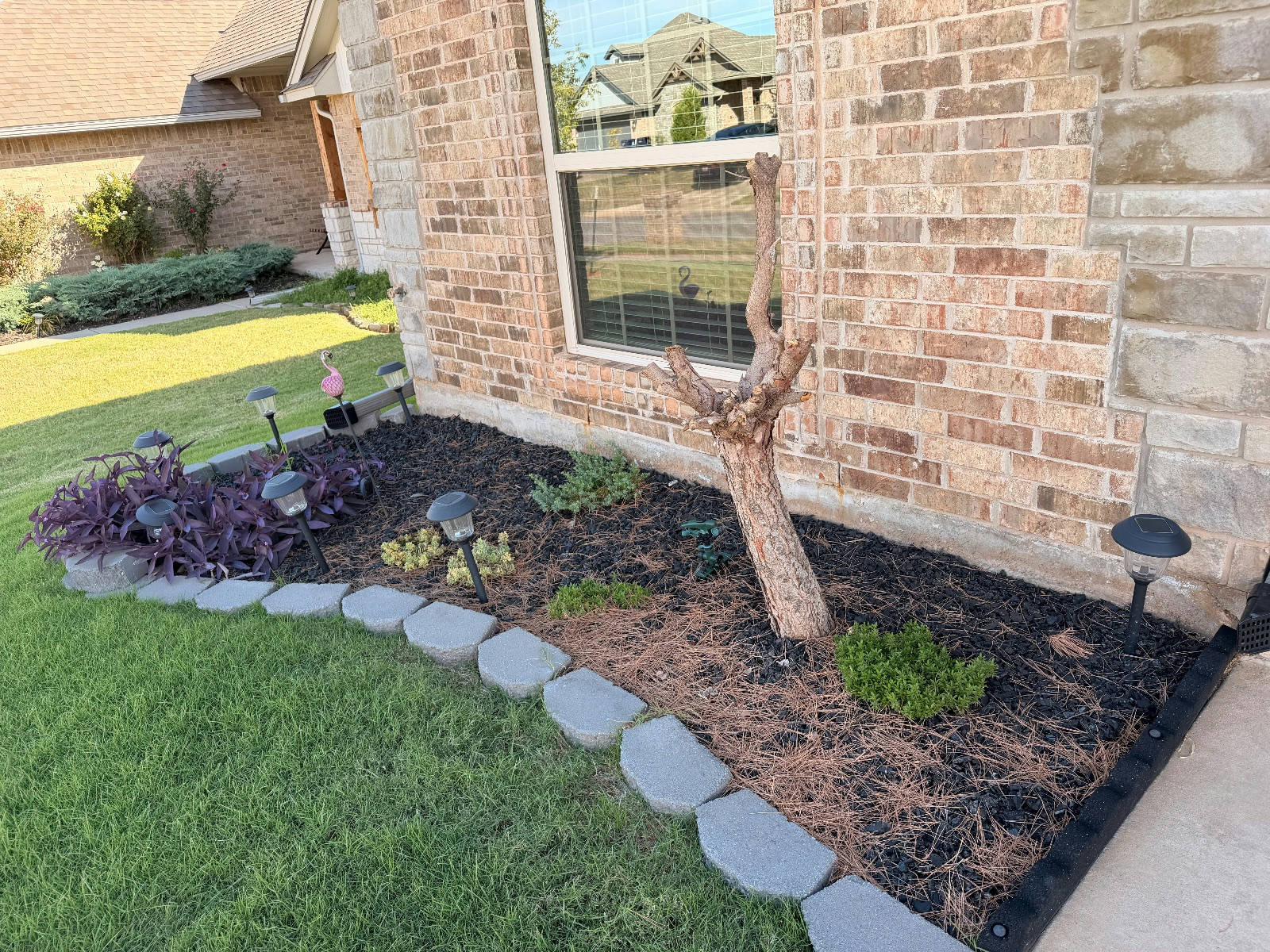
In Edmond’s Castleberry neighborhood, the homeowner had a tree trunk cut down to about waist height right against the front brick facade. It was sitting directly under a picture window in an active landscape bed. They needed the rest of the wood cut flush, the stump ground below grade, and old mulch cleared out so they could refresh the bed without broken windows or rutted turf.
WHAT THE HOMEOWNER WAS DEALING WITH
The homeowner in the Castleberry neighborhood had taken down the top half of an ornamental tree that had outgrown its space, leaving a three-foot upright stump sitting two feet from their front brick wall. It was an eyesore right below the main front window, but taking it out completely was tricky.
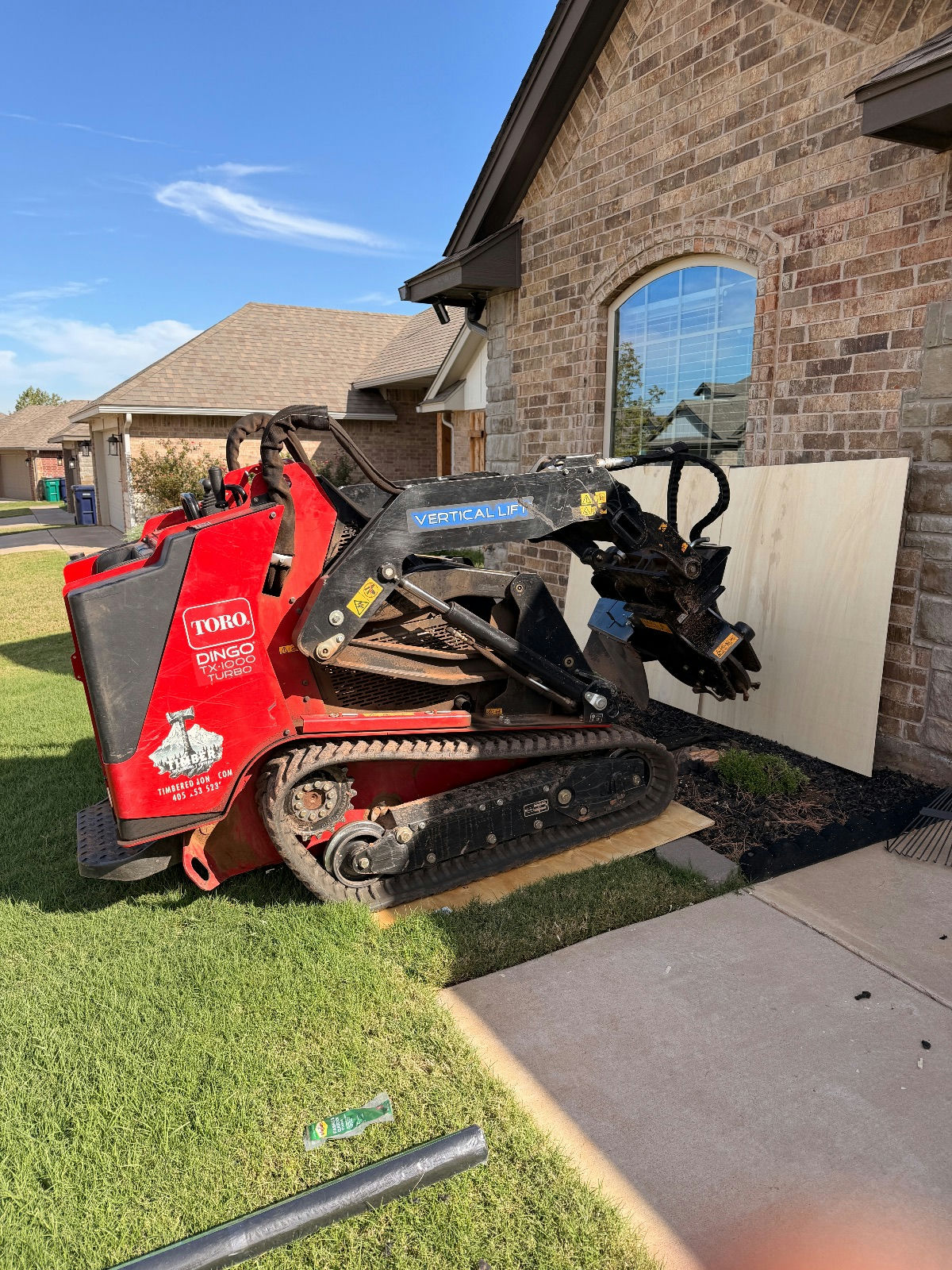
Grinding a stump this close to brick veneer and glass makes homeowners nervous, and for good reason. A standard stump grinder spins hardened carbide teeth at thousands of rotations per minute. Hit a loose rock or throw a root chunk, and you can shatter a double-pane window or gouge exterior brickwork in half a second.
THE PROBLEM WITH TIGHT FOUNDATION GRINDING
When a tree grows within two to three feet of a home foundation, its root crown binds tightly with the perimeter soil and landscape fabric. Leaving the stump to rot naturally takes five to ten years in Oklahoma clay, inviting termites, carpenter ants, and fungal growth right against the slab.
At the same time, you cannot just drive a full-size commercial tow-behind grinder into a tight front flowerbed. Heavy wheels tear up Bermuda sod, crack stone edging, and risk striking underground utilities or irrigation lines running along the foundation wall.
HOW WE APPROACHED THE WORK
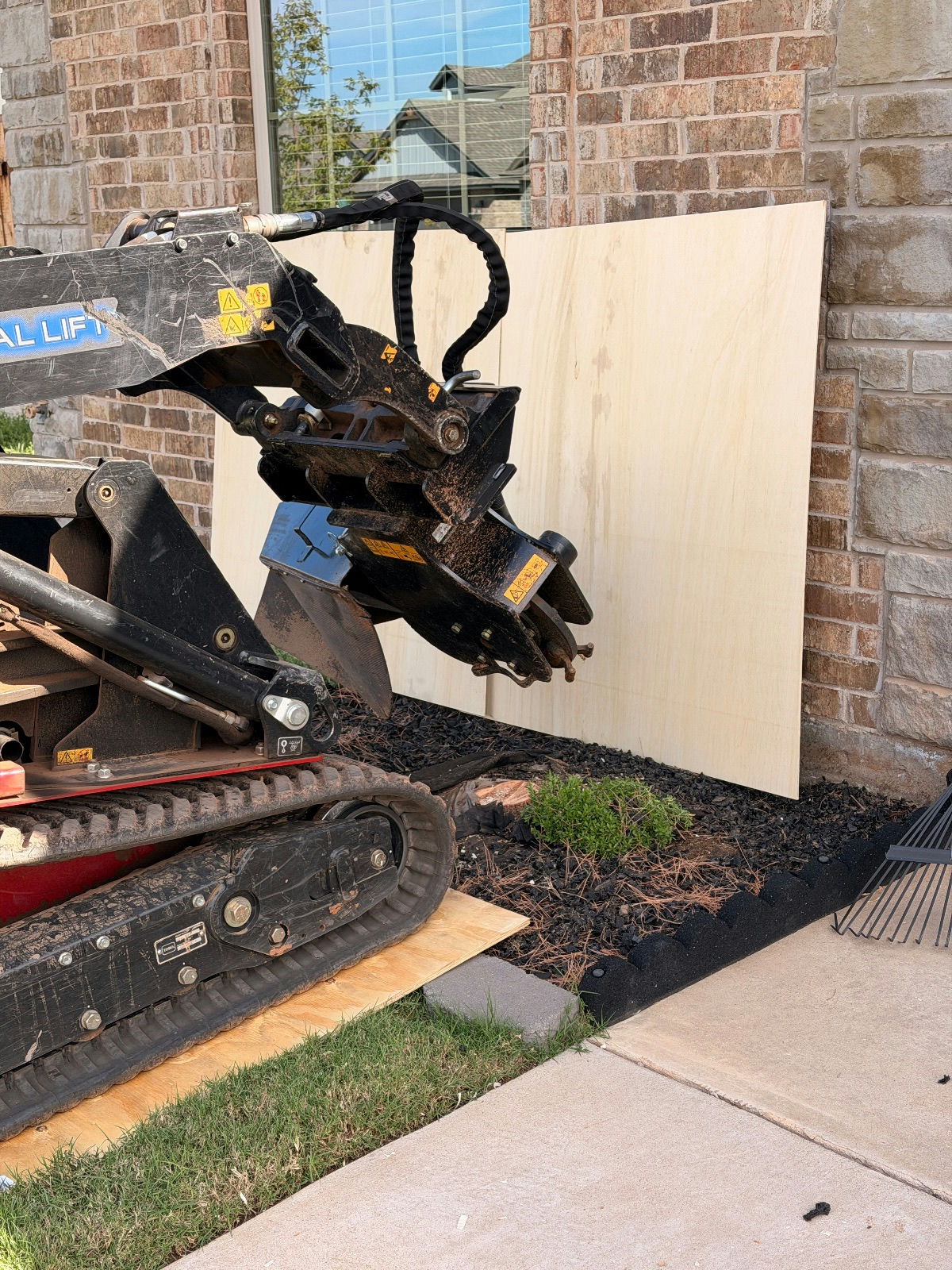
First, we cut the remaining vertical trunk down flush to the bed level to reduce the volume of wood that needed to be ground into chips. Before starting the grinder, we placed heavy plywood sheets directly against the brick facade and across the front picture window. This creates a solid backstop that catches every speck of flying dirt, rock, or wood debris.
To prevent lawn damage, we laid down ground protection boards across the grass and stone edging. We brought in our Toro Dingo TX-1000 track loader fitted with a commercial stump grinder attachment. The rubber tracks distribute the machine weight evenly, leaving zero ruts on the manicured lawn.
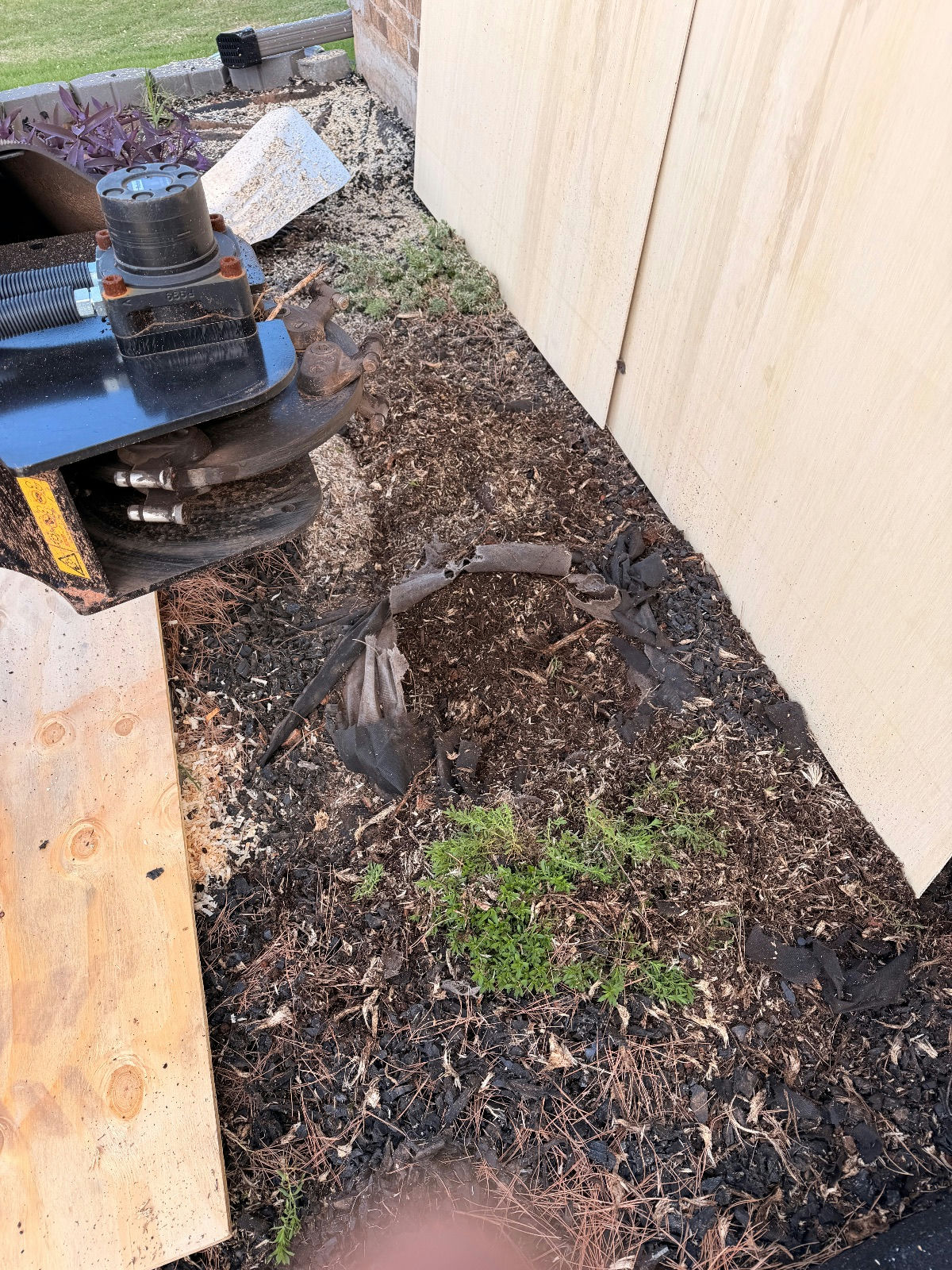
We ground the stump down four to six inches below grade, pulled the old tangled landscape fabric, and shoveled out the aged mulch as requested. That left the flowerbed flat, clean, and completely prepped for fresh mulch and new landscape plantings.
THE RESULT
The stump is gone, the window and brick never took a single scratch, and the lawn edge remained pristine. We raked the bed clean, removed the old mulch and wood debris, and left the homeowner with a clean slate ready for their weekend planting project.
GRINDING STUMPS NEAR FOUNDATIONS — WHAT TO KNOW
Homeowners often ask whether stump grinding will crack their foundation or tear up their water lines. The answer comes down to machine choice and knowing what is underneath the ground before spinning a wheel.
Equipment Size Matters
Look for compact track loaders or pedestrian grinders that keep ground pressure low and fit through standard gates without crushing turf.
Wall and Glass Shielding
High-speed carbide teeth will send stones flying at high velocity. Plywood shields against walls and glass are mandatory.
Locating Buried Lines
Irrigation lines and low-voltage landscape wiring often run right through front beds. Flagging them early prevents costly repairs.
Target Depth
Grinding four to six inches below the soil surface is usually plenty for flowers, turf, or groundcover while avoiding deep subgrade interference.
Soil Preparation
Fresh wood chips rob nitrogen from the soil if left deep in planting beds. Clearing chips out lets you bring in fertile soil for new shrubs.
SMART PLANTS FOR FOUNDATION BEDS IN EDMOND
When replacing an overgrown ornamental tree planted too close to an Edmond home, picking the right species prevents having to grind out another stump a decade later. These selections stay compact and handle central Oklahoma clay and summer heat without threatening foundations.
Little Gem Magnolia
Naturally compact, thornless, and tolerant of intense Oklahoma afternoon sun with minimal root expansion.
Shishigashira Japanese Maple
A slow-growing Japanese maple cultivar that reaches 8–10 feet max, perfect for morning sun and sheltered foundation corners.
Dwarf Burford Holly
Thrives in Oklahoma clay, tops out at 4–6 feet, and provides dense evergreen structure without aggressive root systems.
Oklahoma Mock Orange
A native multi-stem shrub that maxes out around 8 feet, offering deep green foliage and delicate white blooms in late spring.
SEE ALSO
Need this kind of work at your place? Read more about stump grinding in Edmond and Oklahoma City.
NEED A STUMP REMOVED NEAR YOUR FOUNDATION?
Send us a photo of the stump and the area around it. We will give you a clear, straightforward estimate within hours.
Call or Text (405) 253-5232 Photo Estimate — 60 SecondsFrequently Asked Questions
Where was this stump, and why was it tricky?
In Edmond's Castleberry neighborhood, a tree had been cut down to about waist height, sitting about two feet from the front brick wall and directly under a picture window in an active landscape bed.
Why not just leave the stump to rot?
When a tree grows within two to three feet of a foundation, the root crown binds tightly with the perimeter soil. Leaving the stump to rot naturally can take five to ten years in Oklahoma clay and can invite termites, carpenter ants, and fungal growth right against the slab.
How did you protect the house while grinding?
We first cut the remaining trunk flush to the bed, then placed heavy plywood sheets against the brick facade and across the front picture window as a backstop before starting the grinder. Old mulch was cleared so the bed could be refreshed without broken windows or rutted turf.